Fabric and technology
Pale buff-grey fabric with numerous white limestone inclusions.
Forms
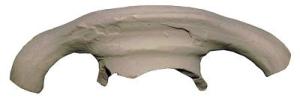
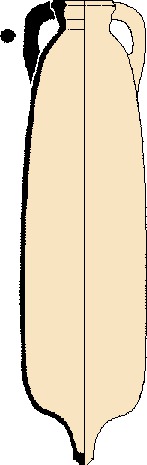
Long cylindrical body terminating in short hollow spike with short neck and thick triangular rim, to which the thick round handles are joined.
Stamps
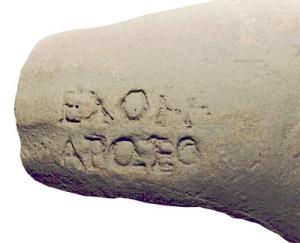
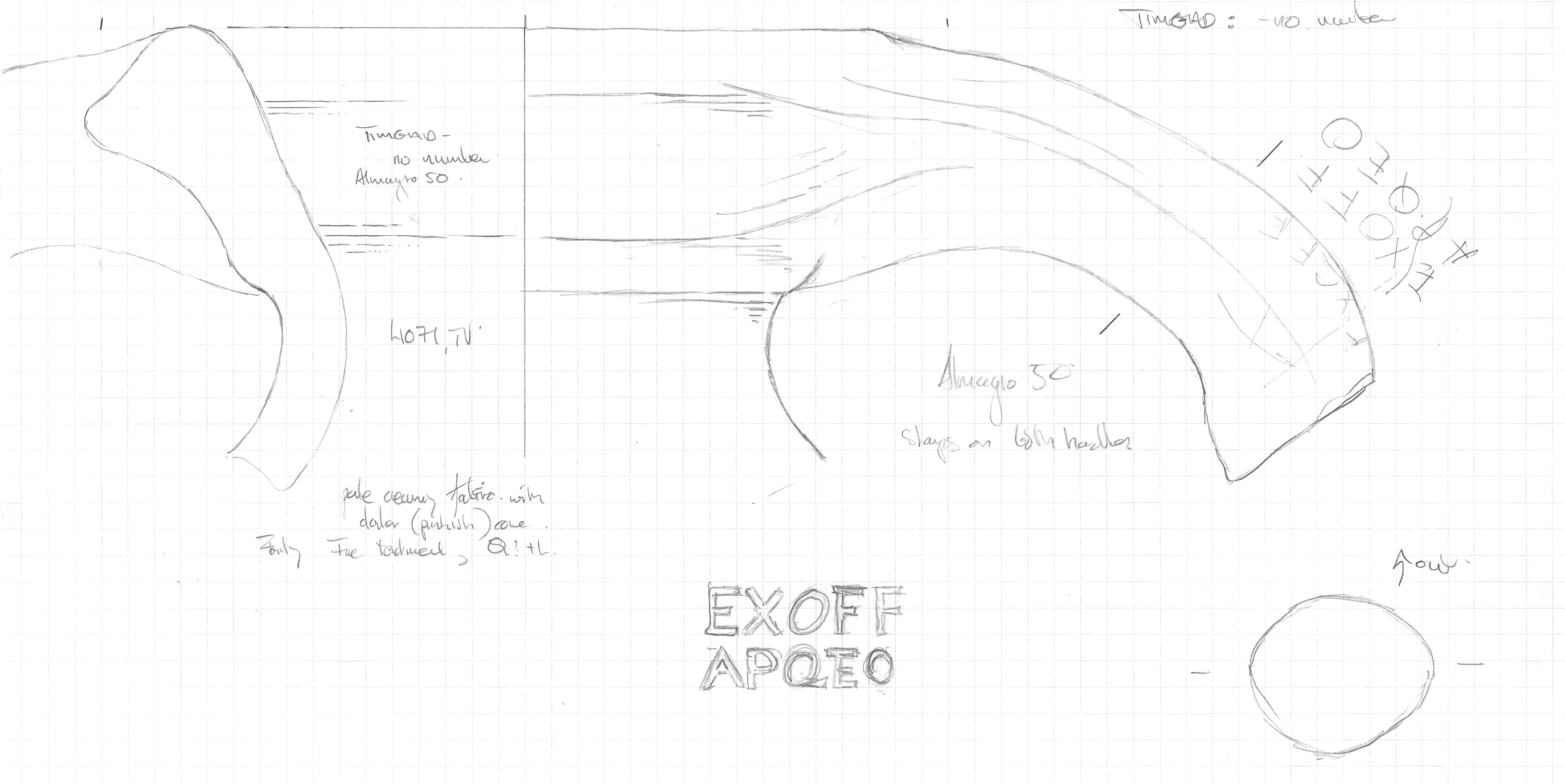
Stamps on some handles (list in Edmondson 1987, 167-170).
Chronology
4th to 5th c. AD.
Source
Lusitania (Portugal), particularly the Algarve.
Distribution
Around Western Mediterranean (including examples from wrecks) with a few specimens from northern Gaul and Britain.
Aliases
Keay class XXII. Lusitania (Edmondson) type II. Peacock and Williams class 22 (Ostia VII, Keay XXII).
Bibliography
Discussion in: Keay 1984, 151, 155; Edmondson 1987, 165-170, 175; Alarcão and Mayet 1990.
References
Alarcão and Mayet 1990. Alarcão, A. and Mayet, F., (eds), Les amphores lusitaniennes. Typologie, production, commerce., Museu Monográfico de Conimbriga, Conimbriga, (1990).
Edmondson 1987. Edmondson, J. C., Two industries in Roman Lusitania. Mining and garum production, British archaeological reports. International series, 362, Oxford, (1987).
Keay 1984. Keay, S. J., Late Roman amphorae in the Western Mediterranean: a typology and economic study. The Catalan evidence, British archaeological reports. International Series, 196, BAR, Oxford, (1984).