Fabric and technology
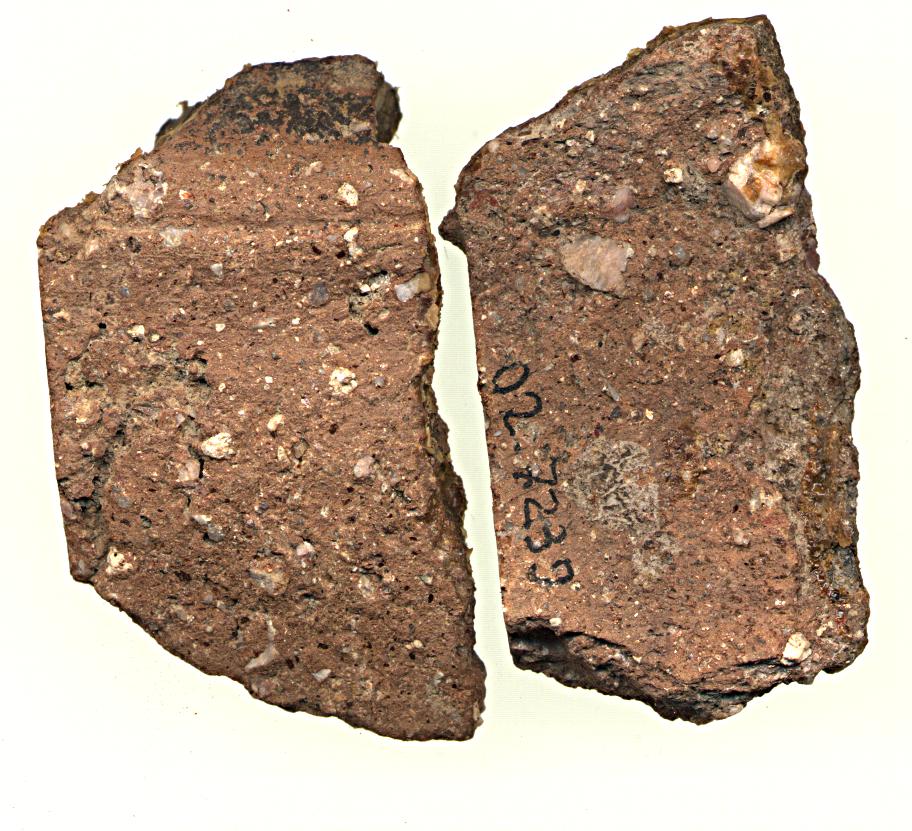
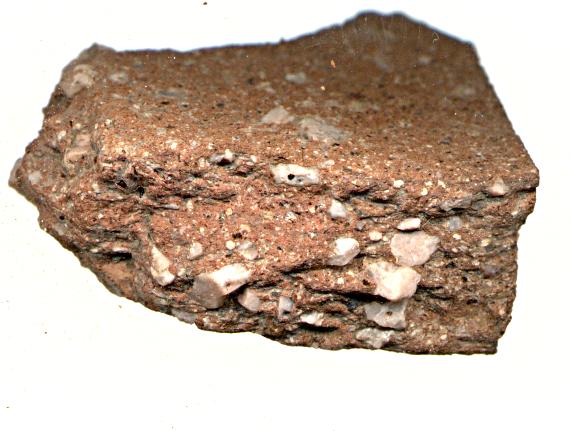
Hard, rough fabric with very irregular fracture; colour ranges from orange- or red-brown through to dark brown, or almost black, but colours towards the middle of the range (2.5YR 6/6 or 2.5YR 4/4) are most common; abundant flakes of biotite mica and very large feldspar inclusions (occasionally over 1cm) prominent in both surface and section; some vessels unevenly smoothed towards rim. Hand-formed.
Forms
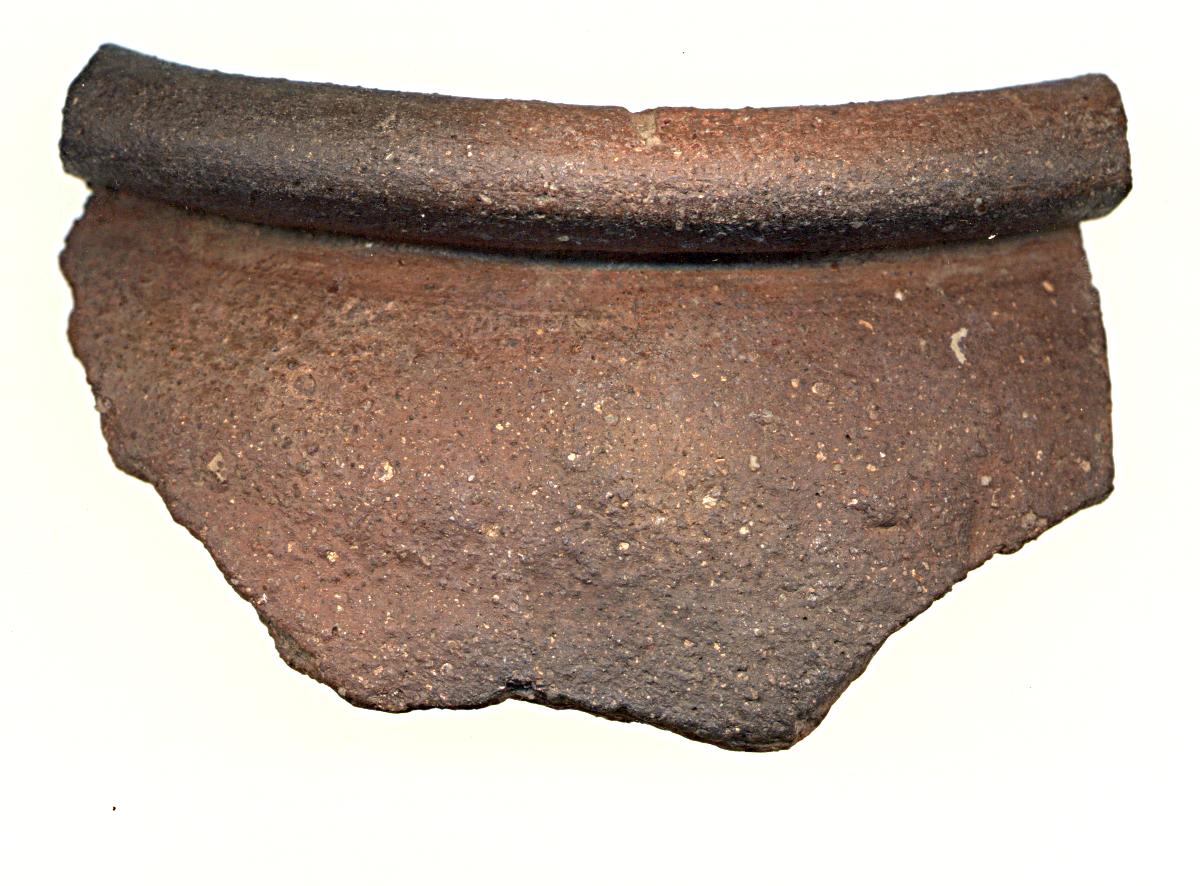
Principal form is jar, with moulded rim, Cam.~262, and there is a single tripod bowl from Sheepen, Cam.~45A.
Chronology
Production of this fabric (in larger, heavier forms with incised decorated band on shoulder – class I & II) commences before Caesarian period, perhaps as early as 100 BC and reaches Basel and northern Gaul at this period. The Cam.~262 form develops by c. 15 BC, and distribution expands; no evidence for production after early Tiberian period.
Source
Petrology and distribution suggests a source in Morvan, between the Saône and the upper Loire.
Distribution
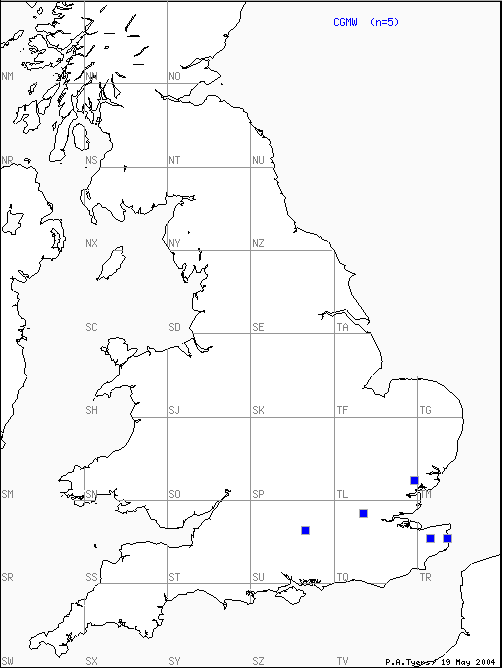
Wide but thin distribution across Gaul; most abundant (and highest proportion of the assemblage) in Burgundy and upper Loire valley.
Aliases
For historical reasons the Cam.~262 form is known as le type Besanon in the French literature, although it is neither made nor found at Besançon.
Aliases
Bibliography
Tyers (forthcoming) ; on the Besançon ‘type’ – a conflation of several wares: Ferdière and Ferdière 1972.
References
Ferdière and Ferdière 1972. Ferdière, A. and Ferdière, M., ‘Introduction à l’etude d’un type céramique: Les urnes à bord mouluré Gallo-Romaines précoces’, RAE, 22, (1972), pp. 77-88.
Tyers (forthcoming). Tyers, P. A., ‘Central Gaulish coarse wares’, forthcoming.