Fabric and technology
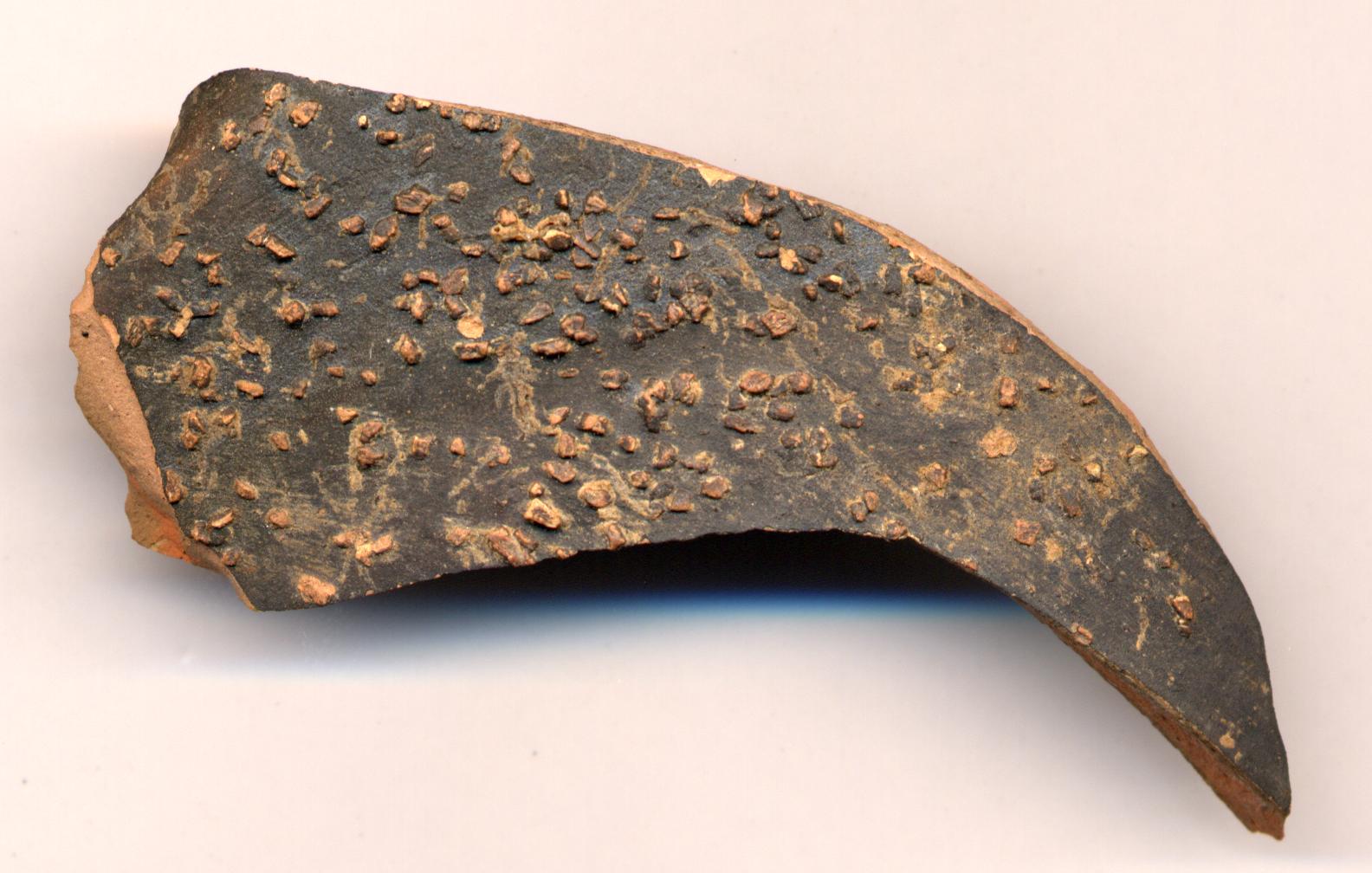
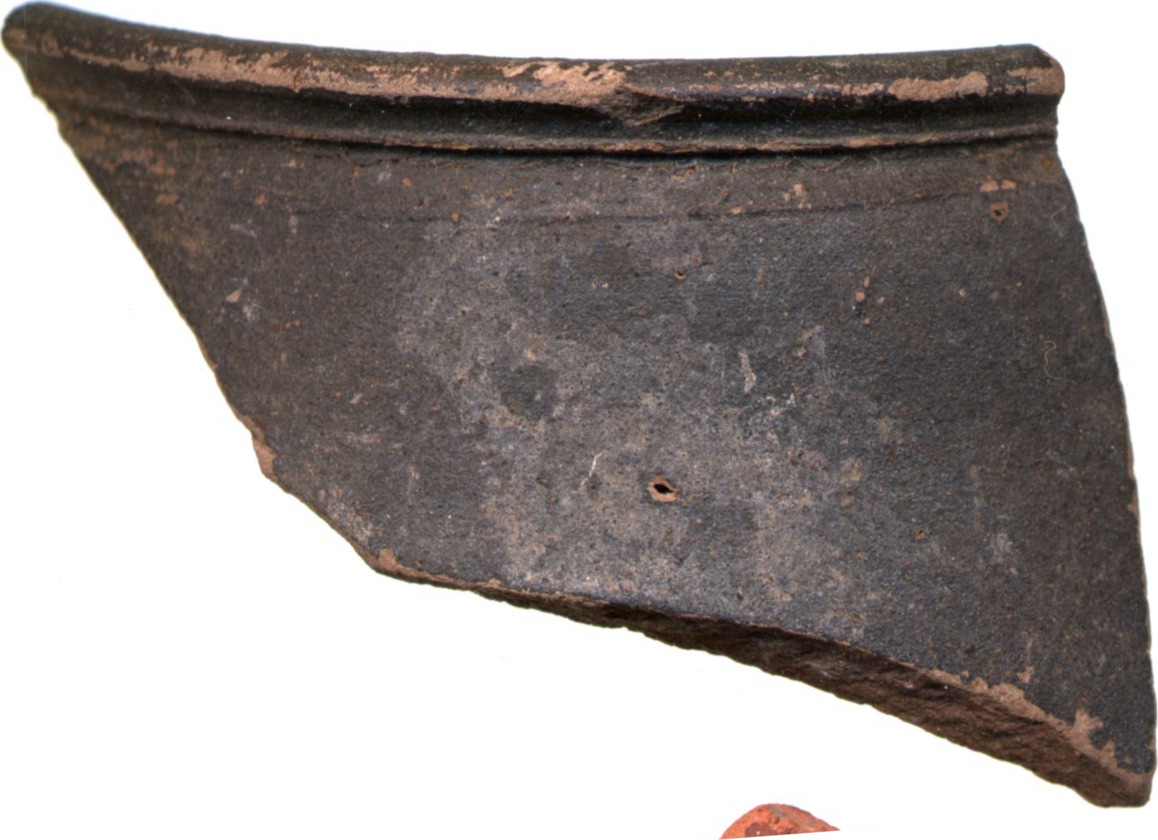
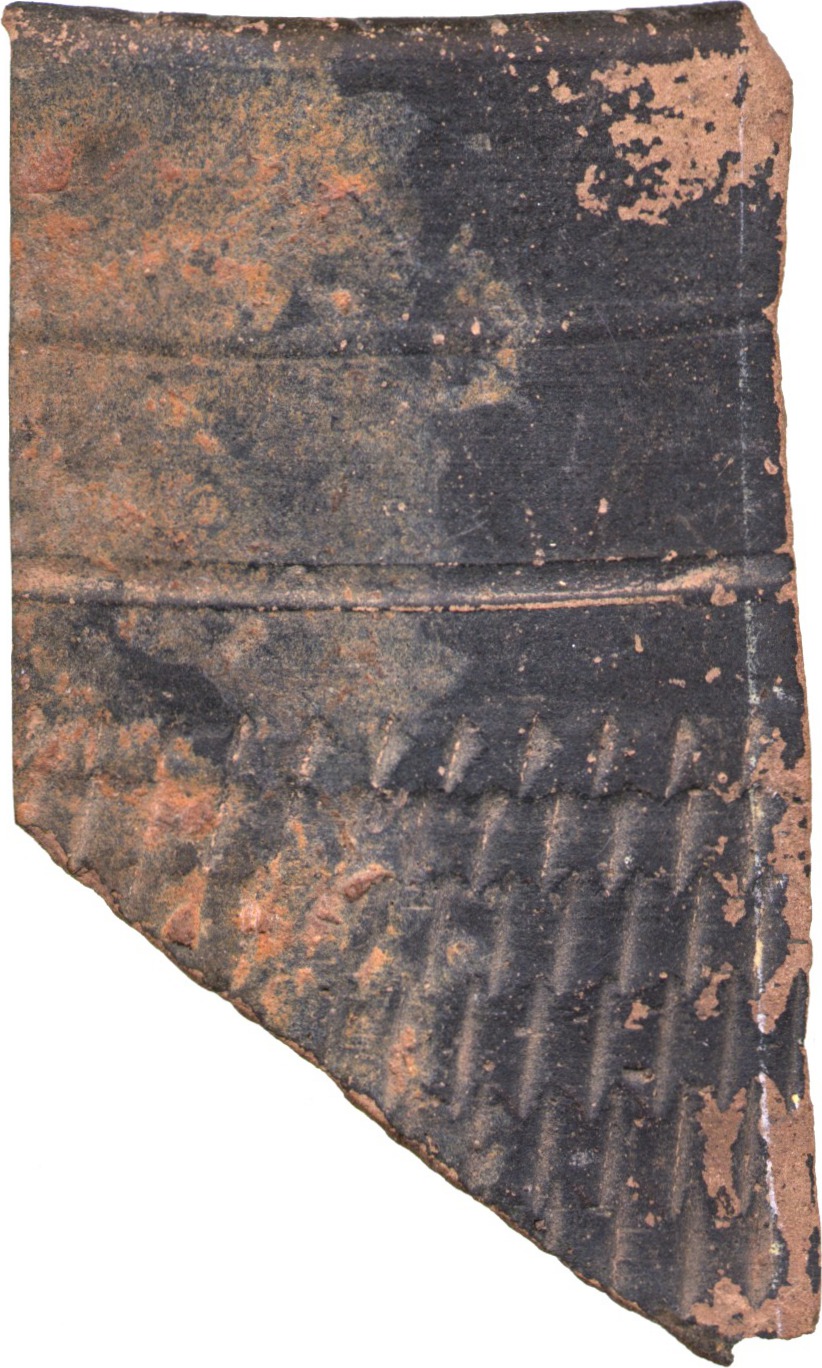
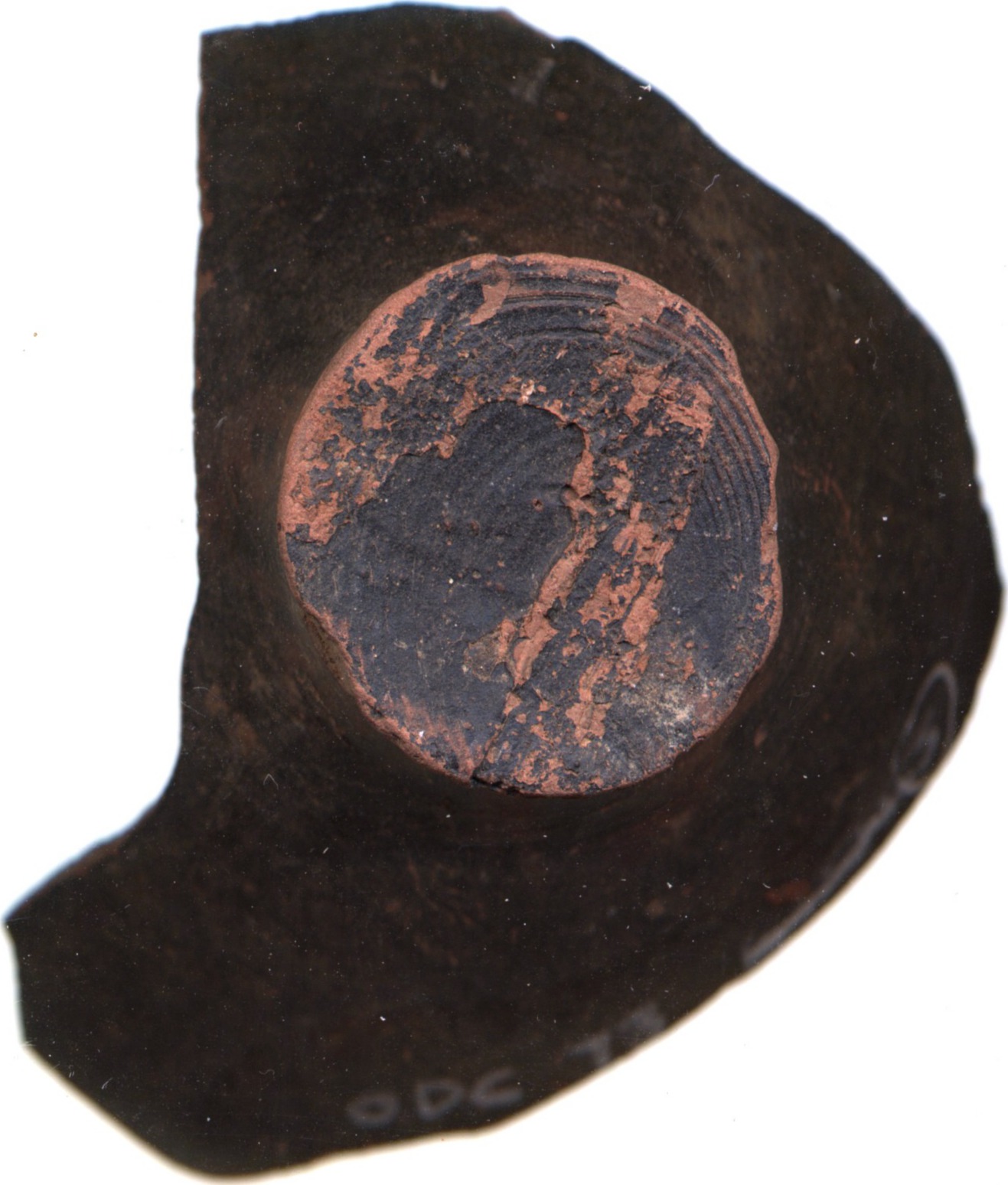
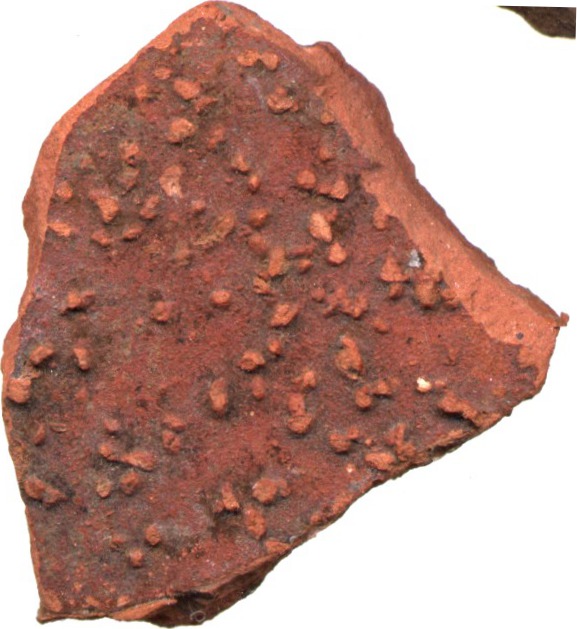
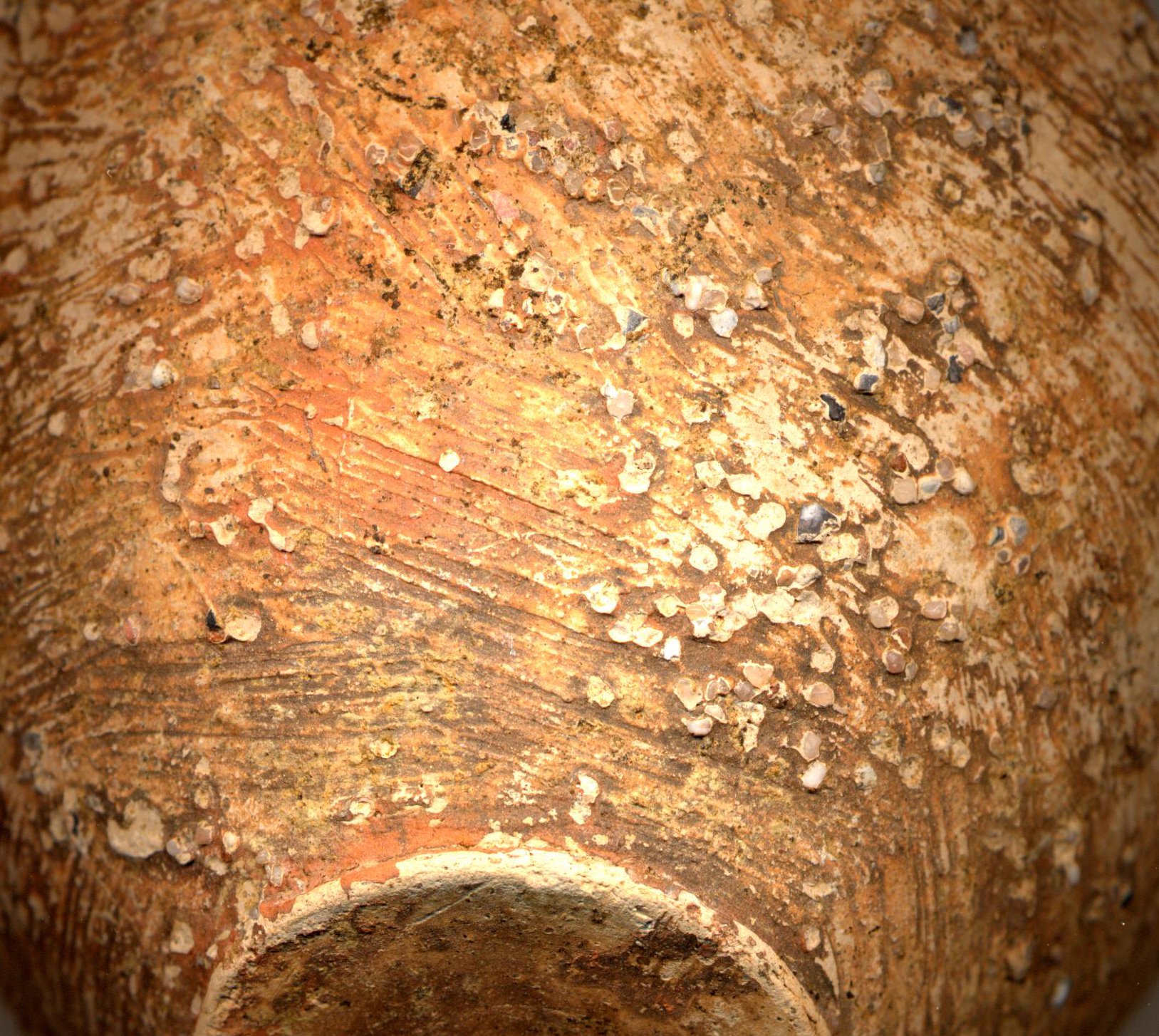
Fine fabric with smooth fracture, but varying from soft to very hard; core pink (5YR 8/4) through light greyish-brown (5YR 6/1-4; 7/1-4) to dark-grey (5YR 4/1) with slipped matt dark grey or red surfaces; inclusions of black iron ore (may be abundant), mica, quartz sand and calcareous flecks (all fine). Wheel-thrown. Decoration includes barbotine, rouletting, roughcast and appliqué.
Forms
A wide range of tablewares recorded from the kilns, including ‘castor boxes’ and flagons, but beakers most widespread.
| Colchester | Body | Rim | |
|---|---|---|---|
| type | form | form | |
| 1-8 | 391 | bag-shaped | cornice |
| 11-12 | 392 | bag-shaped | plain |
| 15 | 396 | globular | curved |
| 13 | 397 | constricted | curved |
| 9-10 | 406 | ovoid folded | curved |
| 14 | 407 | tall | vertical |
| 16 | 308 | castor box |
Table 1. Classification of Colchester colour-coated forms (after Hull)
2nd-cent. forms are bag-shaped cornice-rimmed Colchester 391, or plain rimmed beakers Colchester 392 with roughcast, rouletted bands or barbotine decoration, including scrolls and ‘hunt cups’. Taller, ovoid folded beakers Colchester 406 more typical of 3rd cent. Rare elaborately decorated specimens, combining appliquè and barbotine techniques, feature human figures participating in gladiatorial shows or religious scenes.
Chronology
Production from c. AD 120 until later 3rd cent. Origin probably lies with potters familiar with East Gaulish/Rhineland industry, where most of the forms have their origin. Some contact maintained with these continental industries throughout the 2nd and early 3rd cent.
Source
Colchester, where many kilns have been excavated on the outskirts of the town.
Distribution
Principally East Anglia, the London basin and southern Britain, with some export to the northern frontier during Antonine period (as)COMO – distribution map incomplete due to problems with identification. From early 3rd, largely confined to local markets.
Aliases
Carlisle fabric 300. Chelmsford fabric 1. Chesterfield fabric 30. Gestingthorpe fabrics C3-C5. Great Chesterford fabric 30. JRPS bibliography fabric clc. Lullingstone fabric 4. Milton Keynes fabric 23a. Kent fine fabric 4b.
Bibliography
For kilns: Hull 1963 (with typology of products); RCHM gazetteer 92-5, F273-88. For fabric: Toller in Draper 1985, 87-8; Anderson 1980, 37.
References
Anderson 1980. Anderson, A. C., A guide to Roman fine wares, Vorda Research Series, 1, Vorda, Highworth, (1980).
Draper 1985. Draper, J., Excavations by Mr. H. P. Cooper on the Roman site at Hill Farm, Gestingthorpe, Essex, EAA, 25, Archaeology Section. Essex County Council, (1985).
Hull 1963. Hull, M. R., The Roman potters’ kilns of Colchester, Reports of the Research Committee of the Society of Antiquaries of London, 21, Society of Antiquaries and the Corporation of the Borough of Colchester, Oxford, (1963).