Fabric and technology
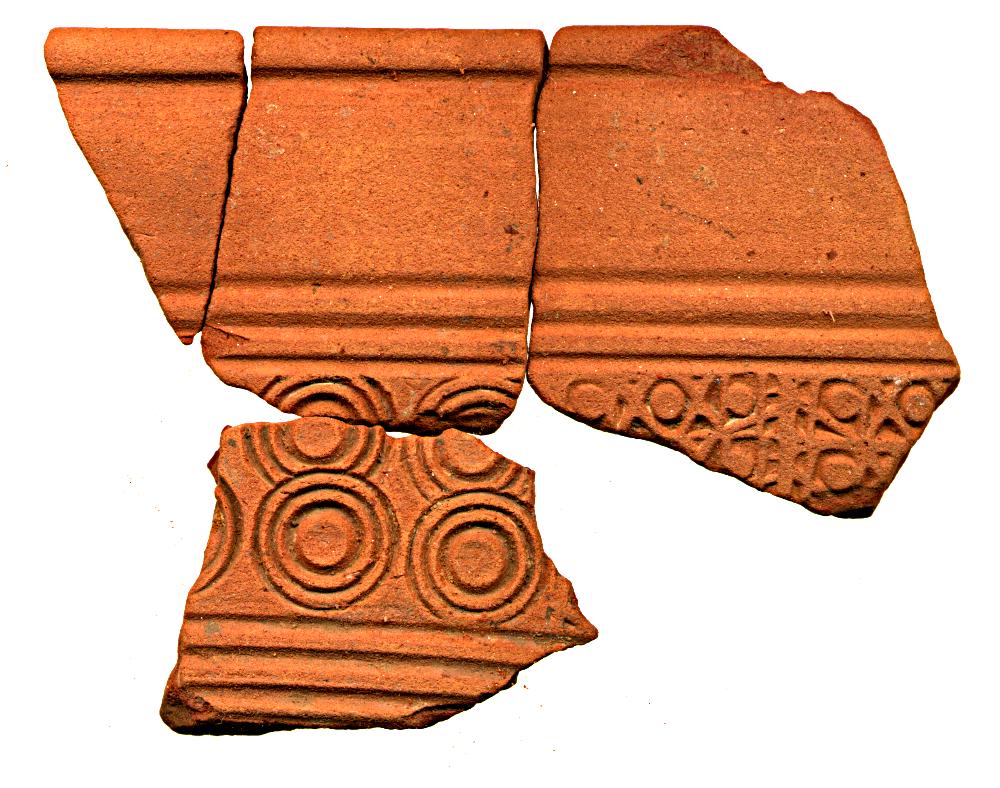
Hard, fine fabric, with slightly laminar fracture; dark grey-brown core (5YR 3/1) with distinct orange margins (2/5YR 5/6) and darker, orange-brown (e.g. 5YR 5/4-4/2) surfaces; tempered with abundant fine quartz and occasional specks of dark-red ironstone in a slightly micaceous matrix. External surface finely-burnished; unsmoothed and slightly uneven interior. Traces of thin slip on some specimens. Wheel-thrown.
Forms
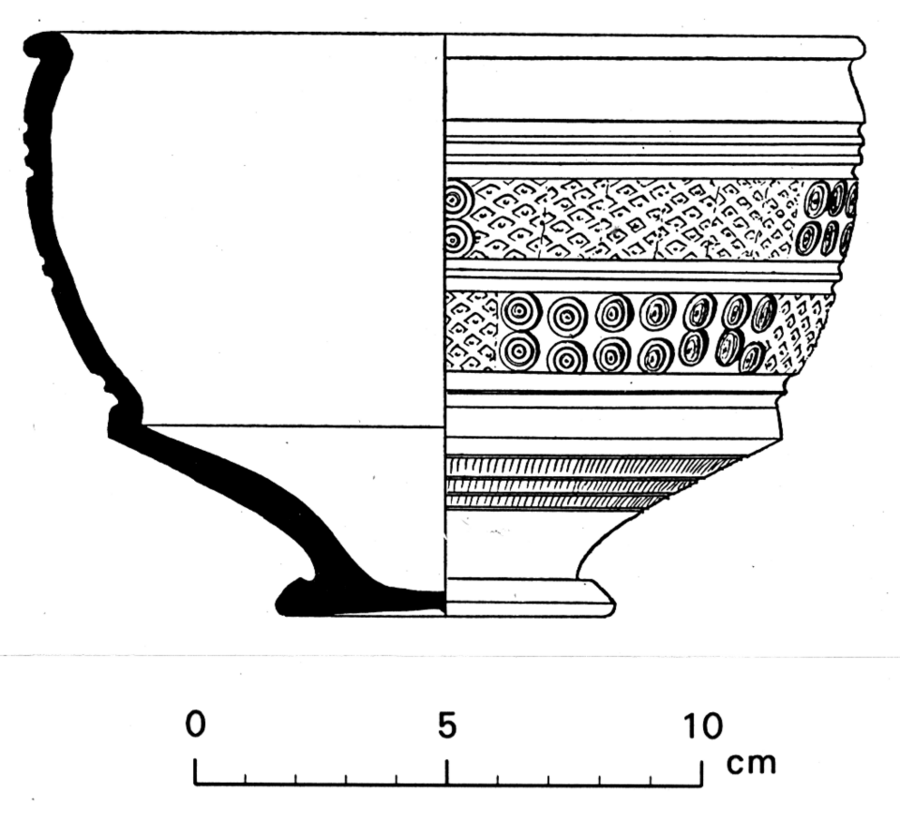
Principal form is cylindrical bowl with pedestal foot and projecting flange, but other forms include hemispherical bowl (loosely imitating samian Drag. 37). Distinctive decoration of panels of block and circle stamps; also grooves, incised comb decoration and rouletting. Stamps and die links are described by Rodwell (1978).
Chronology
Production may commence in the Flavian period, but majority seem to be early 2nd cent.
Source
From the potteries in the region of Little and Much Hadham (Herts./Essex border).
Distribution
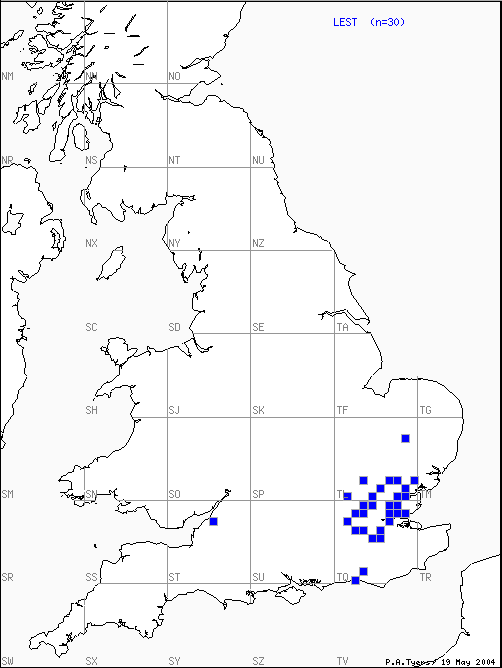
The lower Thames basin, with some outliers such as Sea Mills (Rodwell in Bennett 1985, 51).
Aliases
Chelmsford fabric 19. Colchester fabric GQ. Kent fine fabric 10e.
Bibliography
Rodwell 1978.
References
Bennett 1985. Bennett, J., Sea Mills. The Roman town of Abonae, Monograph, 3, City of Bristol Museum and Art Gallery, Bristol, (1985).
Rodwell 1978. Rodwell, W. J., ‘Stamp-decorated pottery of the early Roman period in eastern England’ in Early Fine wares in Roman Britain, ed. G. D. Marsh and P. R. Arthur, British archaeological reports. British series, 57, BAR, Oxford, (1978), pp. 225-92.