Fabric and technology
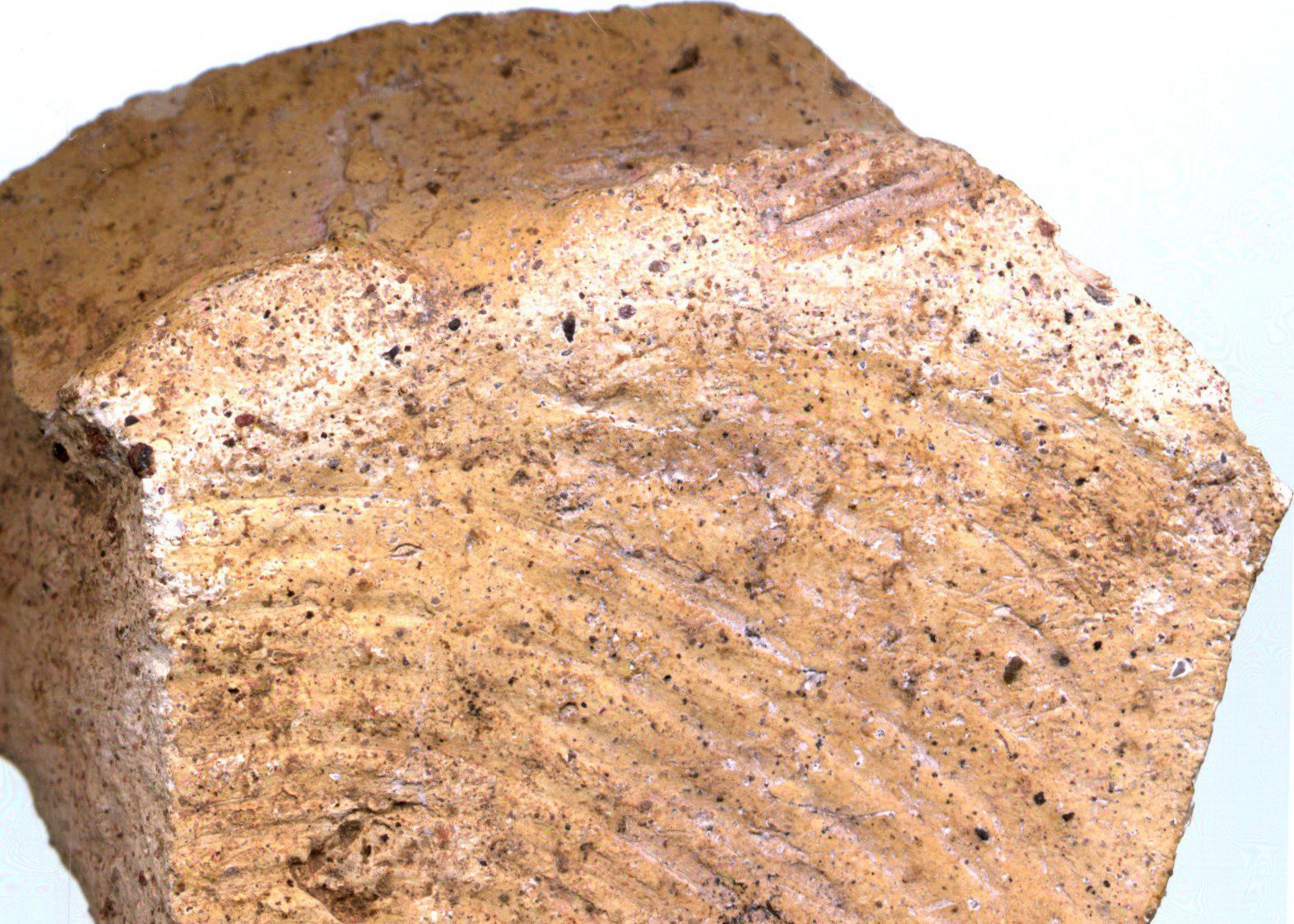
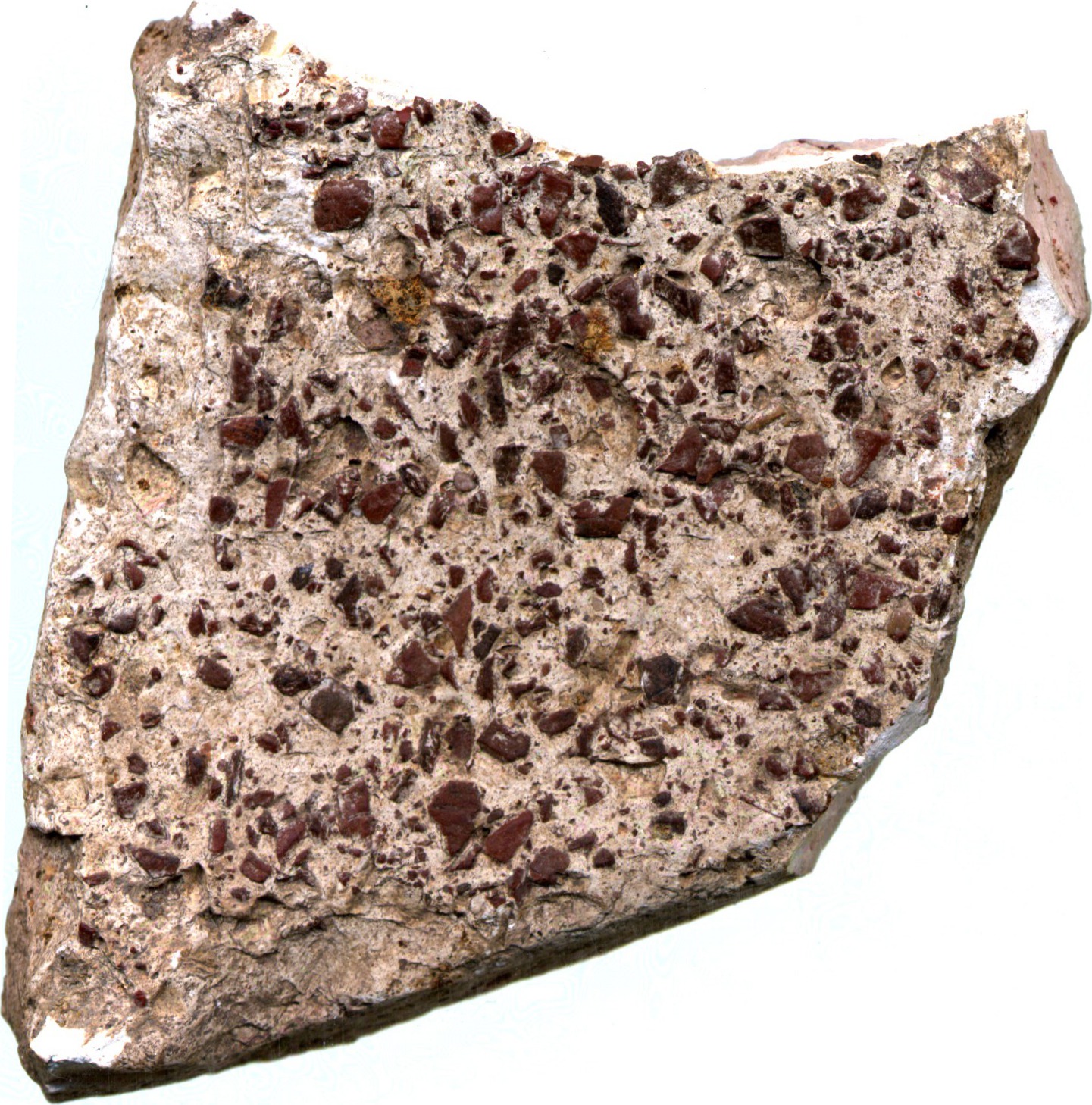
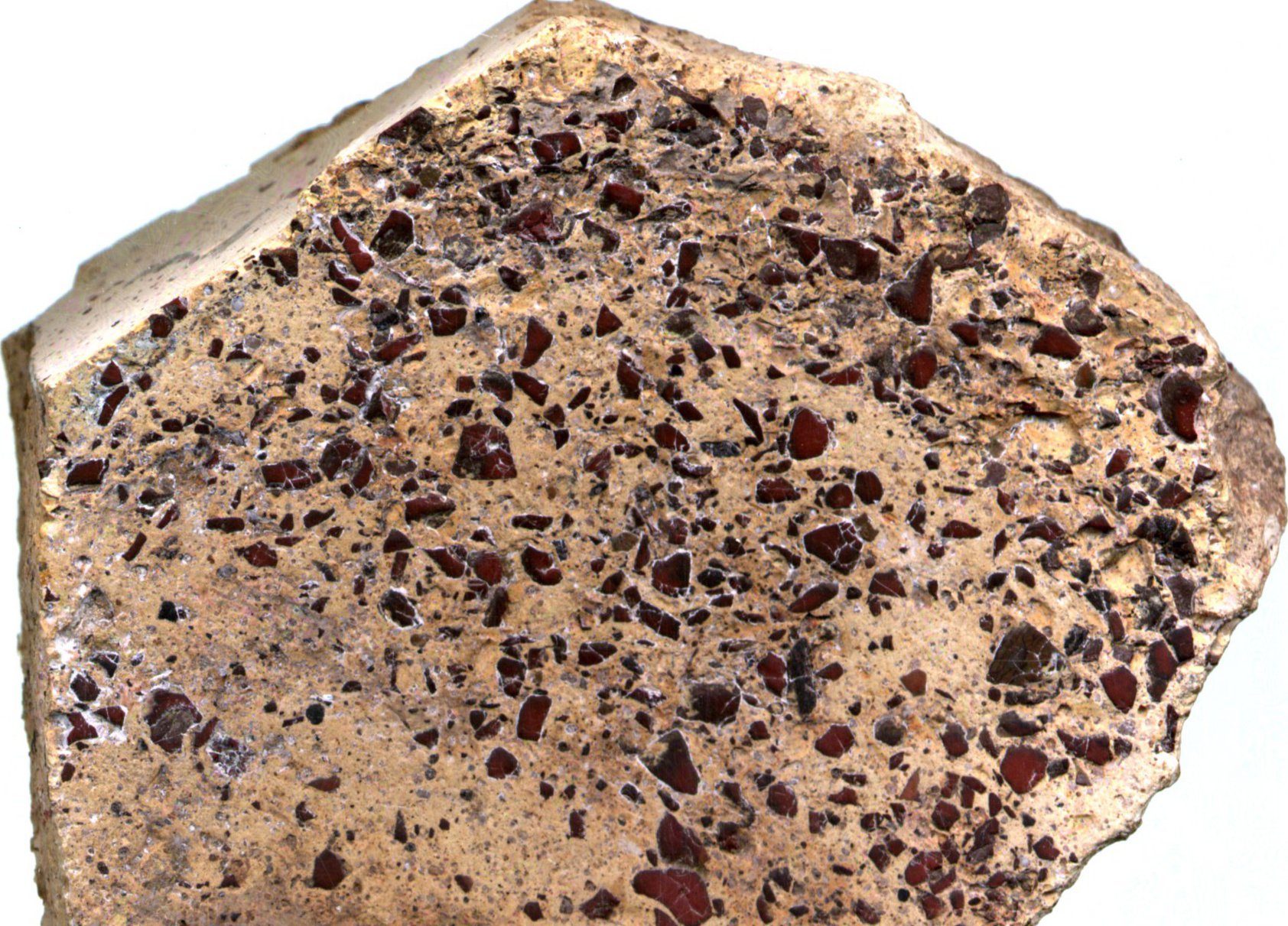
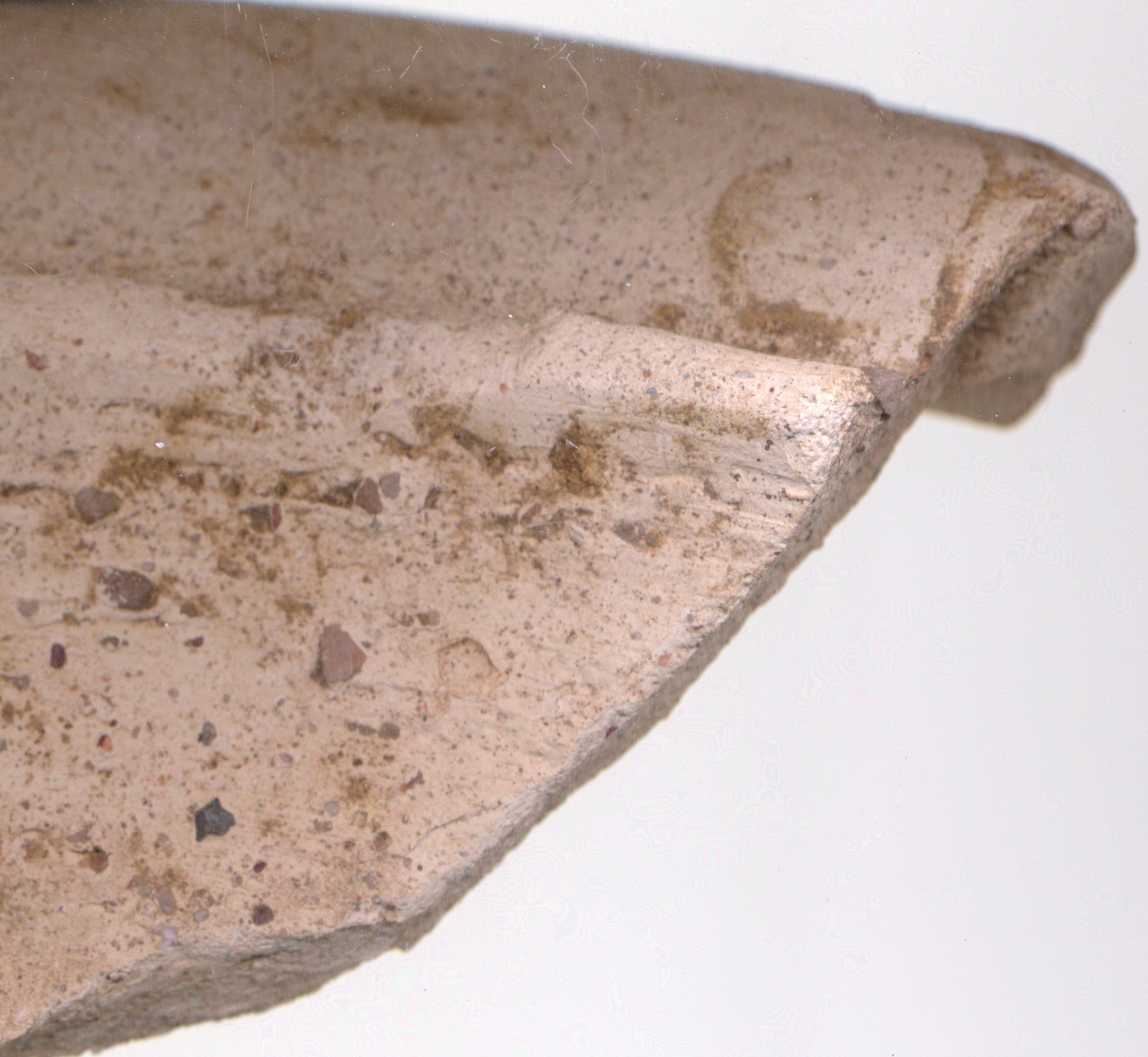
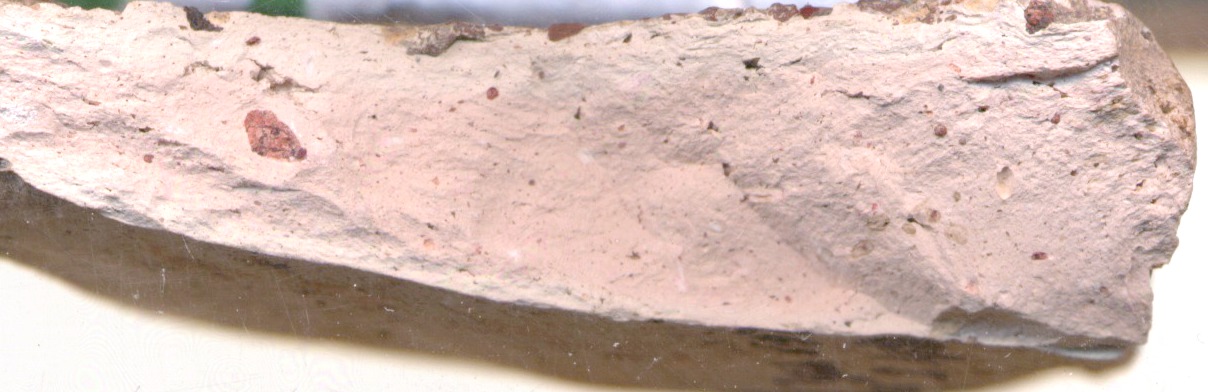
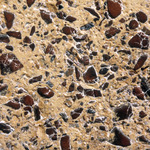
Fine-textured fabric, often very hard; creamy-white, perhaps with pink or grey core, occasionally with a pale-brown wash; inclusions of fine quartz and occasional red-brown and white particles; gritted with either quartz and red-brown sandstone (on earlier specimens), or abundant red-brown or black angular grits (including ironstone or slag). Wheel-thrown.
Forms
Mortaria, the earliest resemble contemporary products of the Verulamium-region industry with a hooked flange, later a smaller flanged and higher bead. From c. AD 160 a new hammerhead style developed. Some painted with simple geometric patterns during 3rd cent. Gillam 242, 253, 254, 257, 259, 261.
Stamps
The chronological distribution of the principal named potters is shown on .
| Potter | Date | |
|---|---|---|
| BONOXUS | 120-160 | |
| BRUSCIUS | 140-170 | |
| CANDIDUS ii | 100-140 | |
| CEVANOS | 100-130 | |
| CICRO|CICRUS | 130-160 | |
| COERTUTINUS | 100-140 | |
| DOBALLUS | 140-180 | <-> NVMO? |
| DOCCAS | 100-125 | <- VRMO |
| ERUCANUS | 100-130 | |
| G. ATTIUS MARINUS | 100-130 | <- VRMO <- COMO |
| GRATINUS | 130-165 | |
| ICOTAGUS | 130-160 | |
| IUNIUS ii | 150-185 | |
| IUNIUS LOCCIUS | 135-165 | |
| LOCCIUS PRO.. | 130-165 | |
| LOCCIUS VIBIUS | 135-165 | |
| MAURIUS | 150-185 | |
| MINOMELUS | 135-165 | |
| MOCO|MOCUS | 100-135 | |
| MOSSIUS | 145-185 | |
| NANIECO | 135-165 | -> WPMO |
| NIDUS | 120-140 | <- VRMO |
| RUICCO|RUTICO | 150-185 | |
| SARRIUS | 135-170 | -> RBMO |
| SENNIUS | 160-185 | |
| SEPTUMINUS | 100-130 | <- Little Chester |
| SIMILIS | 135-170 | -> NVMO |
| SURUS | 100-130 | |
| VICTOR | 100-130 | <-> Little Chester? |
| VITALIS iv | 115-145 |
Chronology
From c. AD 100; some potters migrated from the Verulamium region industry (G. Attius Marinus, Doccas, Nidus) at this time. In some cases the same die occurs on both VRMO and MHMO products. From the mid-2nd cent. some MHMO potters moved north to workshops in Yorkshire (e.g. Sarrius). Stamping ceased at end of 2nd cent. but production continues into 4th cent.
Source
Around Mancetter and Hartshill, on the Warwickshire/Leicestershire border, where many kilns have been recorded and excavated. Painted wares, grey wares and other cooking wares produced alongside mortaria.
Distribution
Extensive in the Midlands and north between mid-2nd and early-4th cent (Bidwell 1985, 183). The distribution of stamps of the principal 2nd cent. AD potters is shown on .
Aliases
Caersws mortarium fabric 5. Carlisle fabric 624. Chesterfield fabric m18. Colchester fabric TM. Doncaster mortarium fabric 11. Exeter mortarium fabric FB4. Gloucester fabric TF9D. Great Chesterford mortarium fabric 18. JRPS bibliography fabric mhm. Leicester fabric MO4. Lullingstone fabric 43. Milton Keynes fabric 4c. Old Penrith fabric 109. Kent mortarium fabric 6. Rough Castle mortarium fabric 1. Sidbury fabric 32. Towcester mortarium fabric 12. Usk mortarium fabric 17.
Bibliography
For the kilns: RCHM gazetteer 98-101, F636-53; Hartley 1973; there is no complete published catalogue of stamps, but most of the principal potters are reported in MacIvor et al. 1981; Buckland and Magilton 1986; Robertson 1975.
References
Bidwell 1985. Bidwell, P. T., The Roman Fort of Vindolanda at Chesterholm, Northumberland, Archaeological Report, 1, Historic Buildings and Monuments Commission for England, London, (1985).
Buckland and Magilton 1986. Buckland, P. C. and Magilton, J. R., The archaeology of Doncaster, 1. The Roman civil settlement, British archaeological reports. British series, 148, Oxford, (1986).
Hartley 1973. Hartley, K. F., ‘The kilns at Mancetter and Hartshill, Warwickshire’ in Current research in Romano-British coarse pottery: papers given at a C.B.A. Conference held at New College, Oxford, March 24 to 26, 1972, ed. A. Detsicas, Research reports/Council for British Archaeology, 10, Council for British Archaeology, London, (1973), pp. 143-7.
MacIvor et al. 1981. MacIvor, I., Thomas, M. C. and Breeze, D. J., ‘Excavations on the Antonine Wall fort of Rough Castle, Stirlingshire, 1957-61’, PSAS, 110, (1981), pp. 230-85.
Robertson 1975. Robertson, A. S., Birrens (Blatobulgium), Dumfriesshire and Galloway Natural History and Antiquarian Society, Edinburgh, (1975).