Fabric and technology
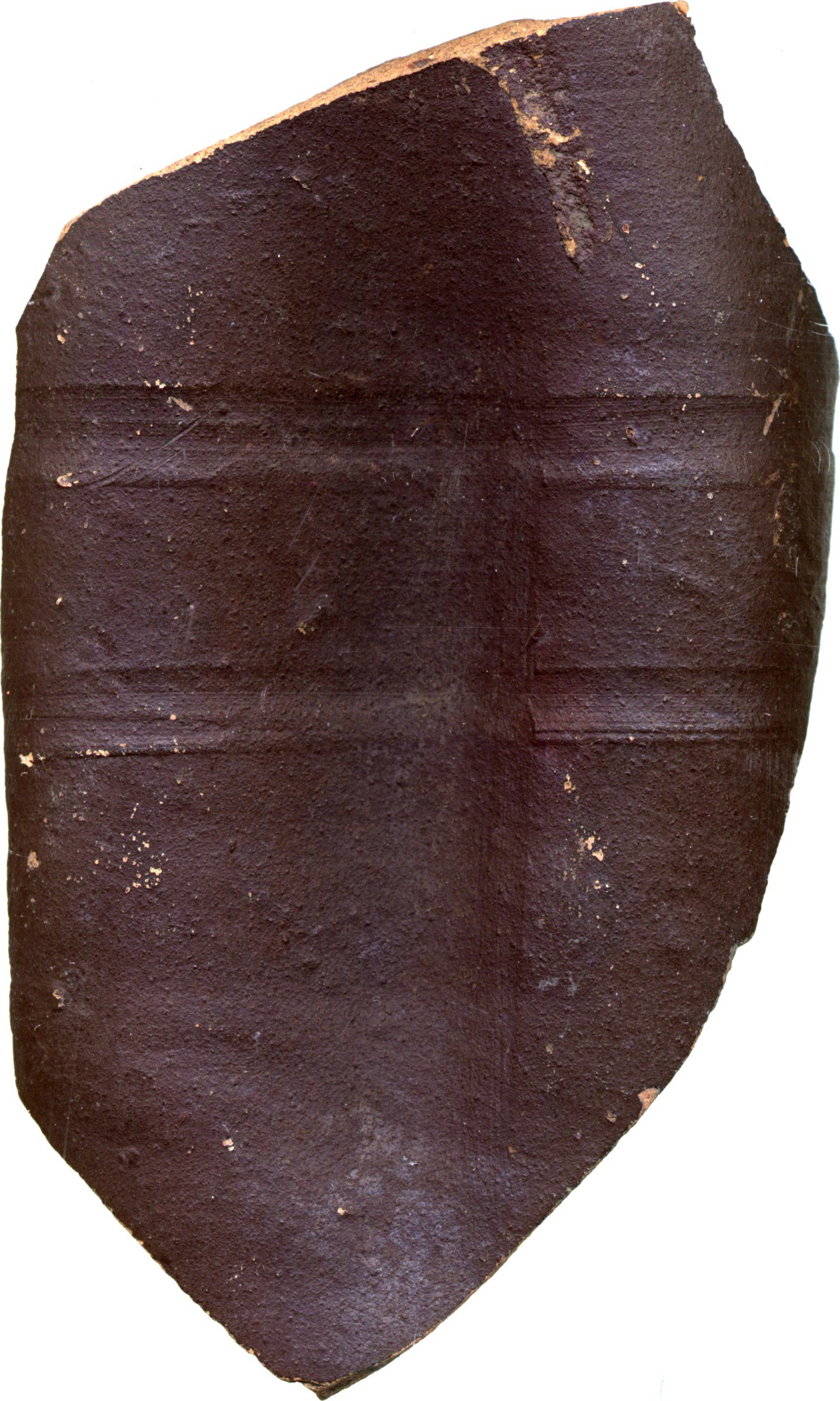
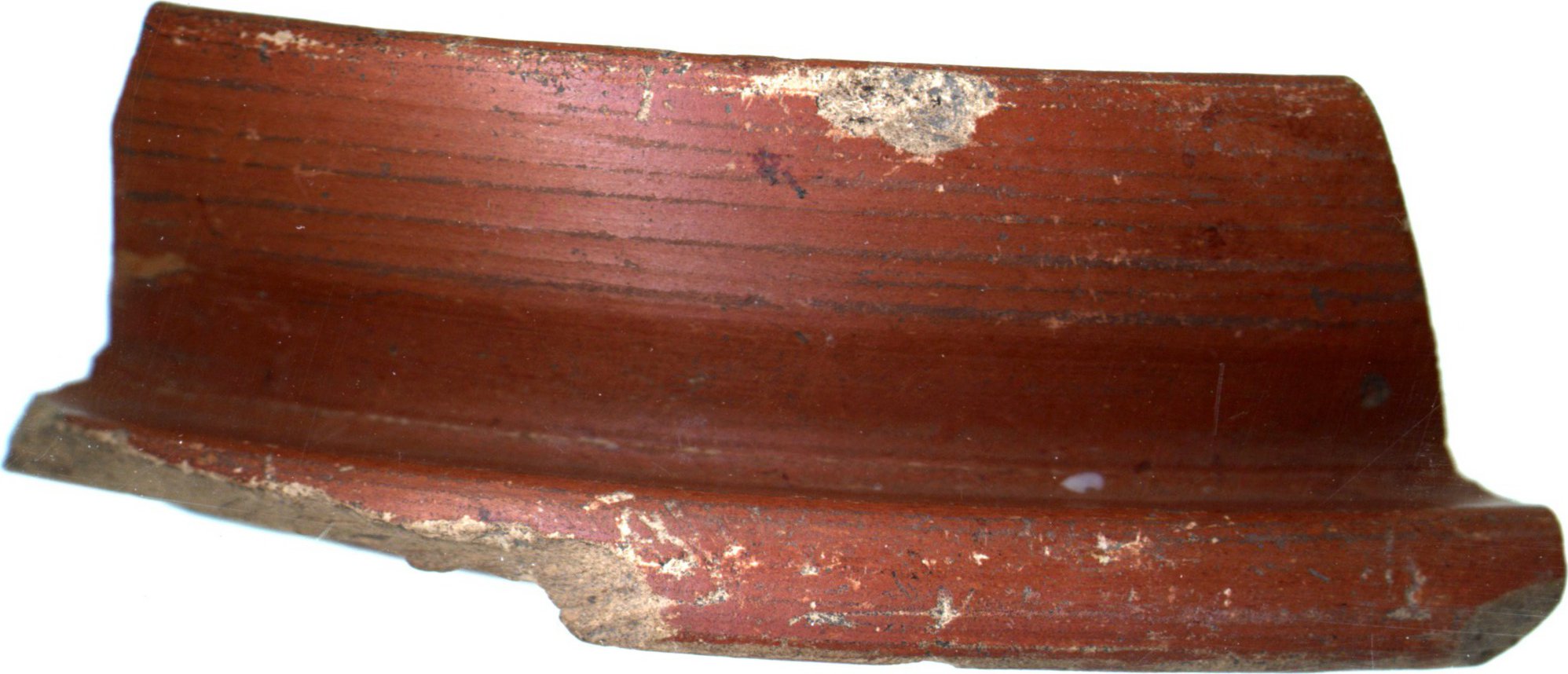
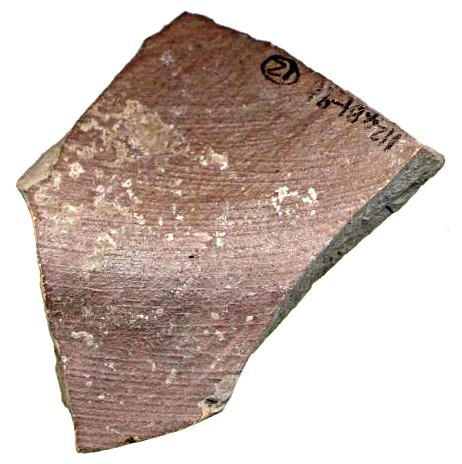
A range of dark- or red-slipped wares. Fulford defines three variants:
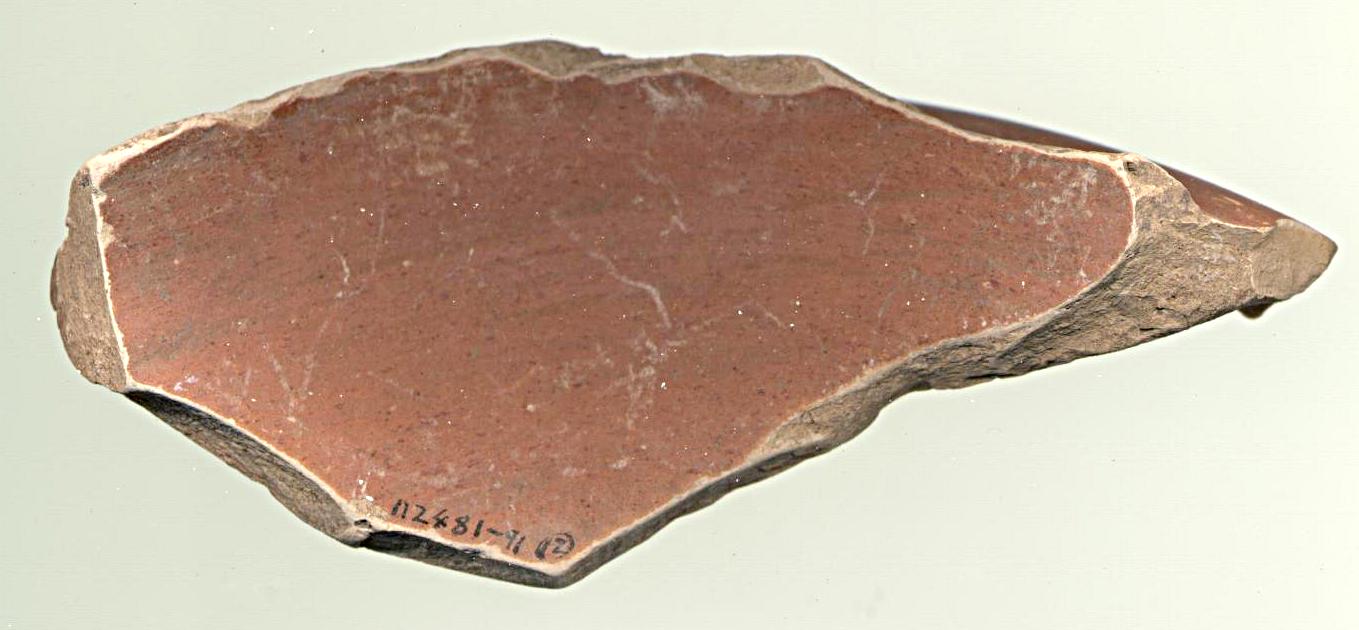
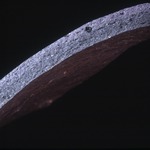
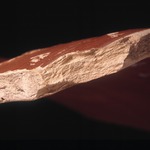
Hard, fine fabric which may be highly fired, up to a ‘stone ware’ quality; reduced grey or dark grey core with surface varying from pale yellow-red, through reddish brown to dark red or purple (often on same vessel), with high metallic sheen (from 2.5YR 3.5/2 to 5.5/8; 2.5Y 2/0) ; rare inclusions of dark iron ores.
Similar to 1a, but oxidized; reddish yellow or reddish brown (5YR 3.5/3; 2.5YR 5.5/8, 2.5/0) slip.
Hard, slightly sandy fabric with granular texture; reddish-yellow (5YR 4.5/6) core with reddish-brown (2.5YR 3.5/6) slip.
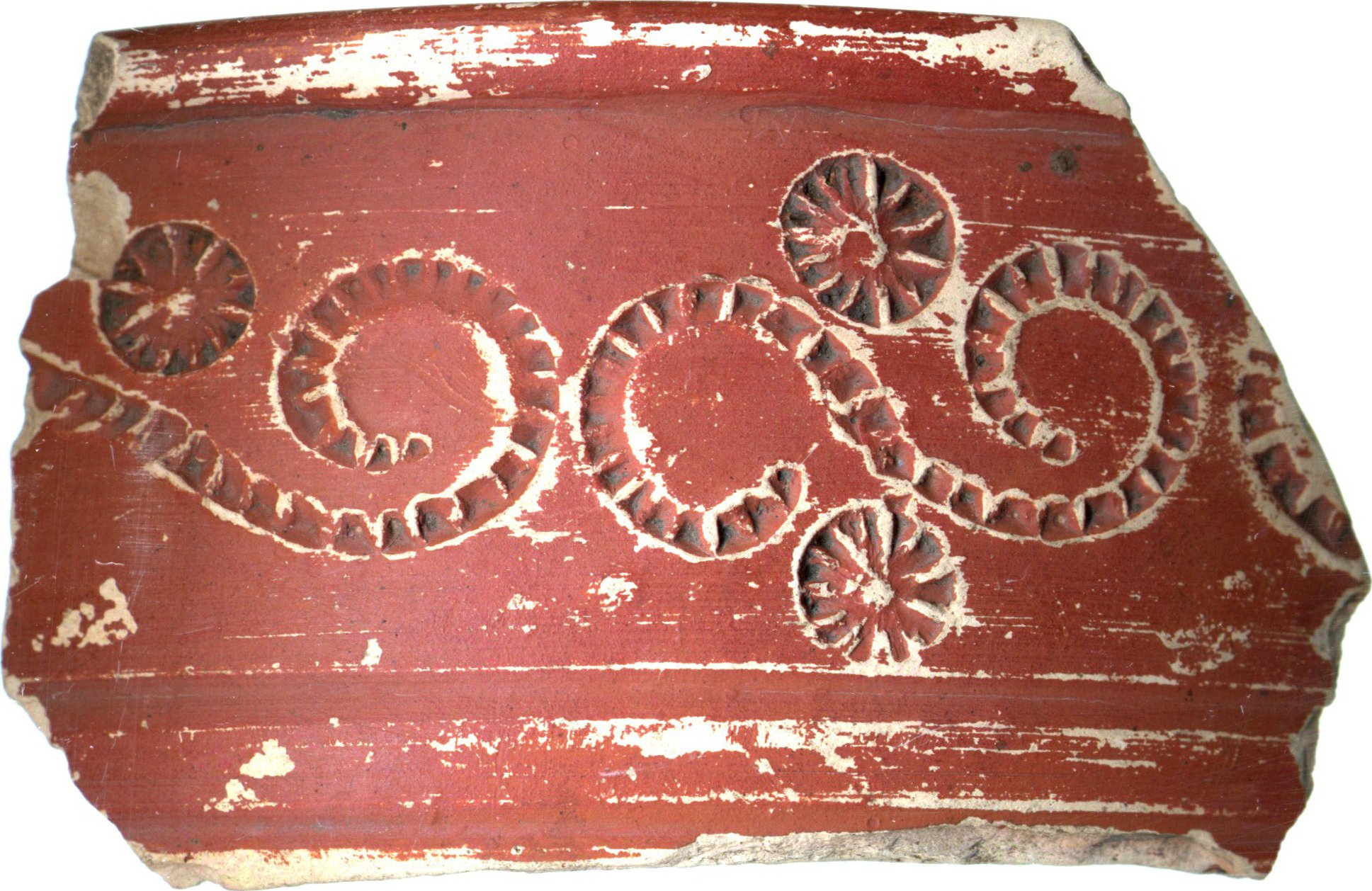
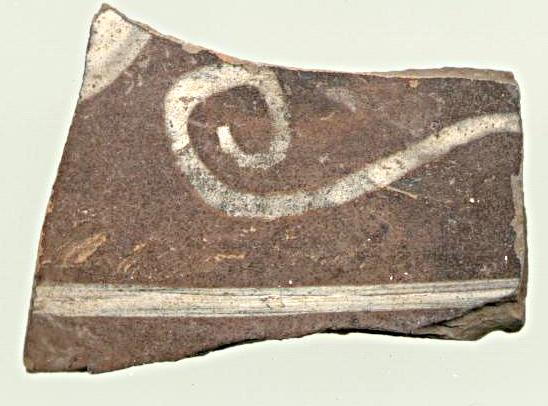
All wheel-thrown. Wide range of decorative techniques, including barbotine scales or leaves, white painted, incised, impressed and rouletted.
Forms
Beakers, flasks, jugs and flagons (fabric 1a) and bowls (fabric 1b/c). Many of the red-slipped bowl types follow late sigillata prototypes (Drag. 31, 33, 35/36, 38, 44, 45 etc), but most widely distributed types are beakers (particularly the folded beaker, type 27), flasks and jugs.
| Form | Description | Fabric |
|---|---|---|
| 1-26 | Flasks and jugs | 1a |
| 27-52 | Beakers | 1a |
| 53 | Cup | 1a |
| 54-57 | Jars or small bowls | 1a |
| 58 | Lid | 1a |
| 59-77 | Bowls | 1b/c |
| 78-81 | Mortaria | 1b/c |
| 82-85 | Misc. bowls | 1b/c |
Table 1. Classification of New Forest slipped ware forms (after Fulford)
Chronology
c. AD 260-370. Production probably ceased before the end of the 4th cent.
Source
The New Forest industry.
Distribution
Widespread in central southern England, with a scatter beyond.
Aliases
Fulford1975, fabric 1.
Aliases
Bath fabric 6.2. Caister-on-sea fabric NFCC-29. Carlisle fabric 302. Dorchester fabrics 20 and 21. Gloucester fabric TF12C. JRPS bibliography fabrics nfc and nfr. Lullingstone fabric 13. Kent fine fabric 14a.
Bibliography
Fulford 1975; RCHM gazetteer 108-9, F322-41, F344
References
Fulford 1975. Fulford, M. G., New Forest Roman pottery. Manufacture and distribution, with a corpus of pottery types, British archaeological reports, 17, BAR, Oxford, (1975).