Fabric and technology
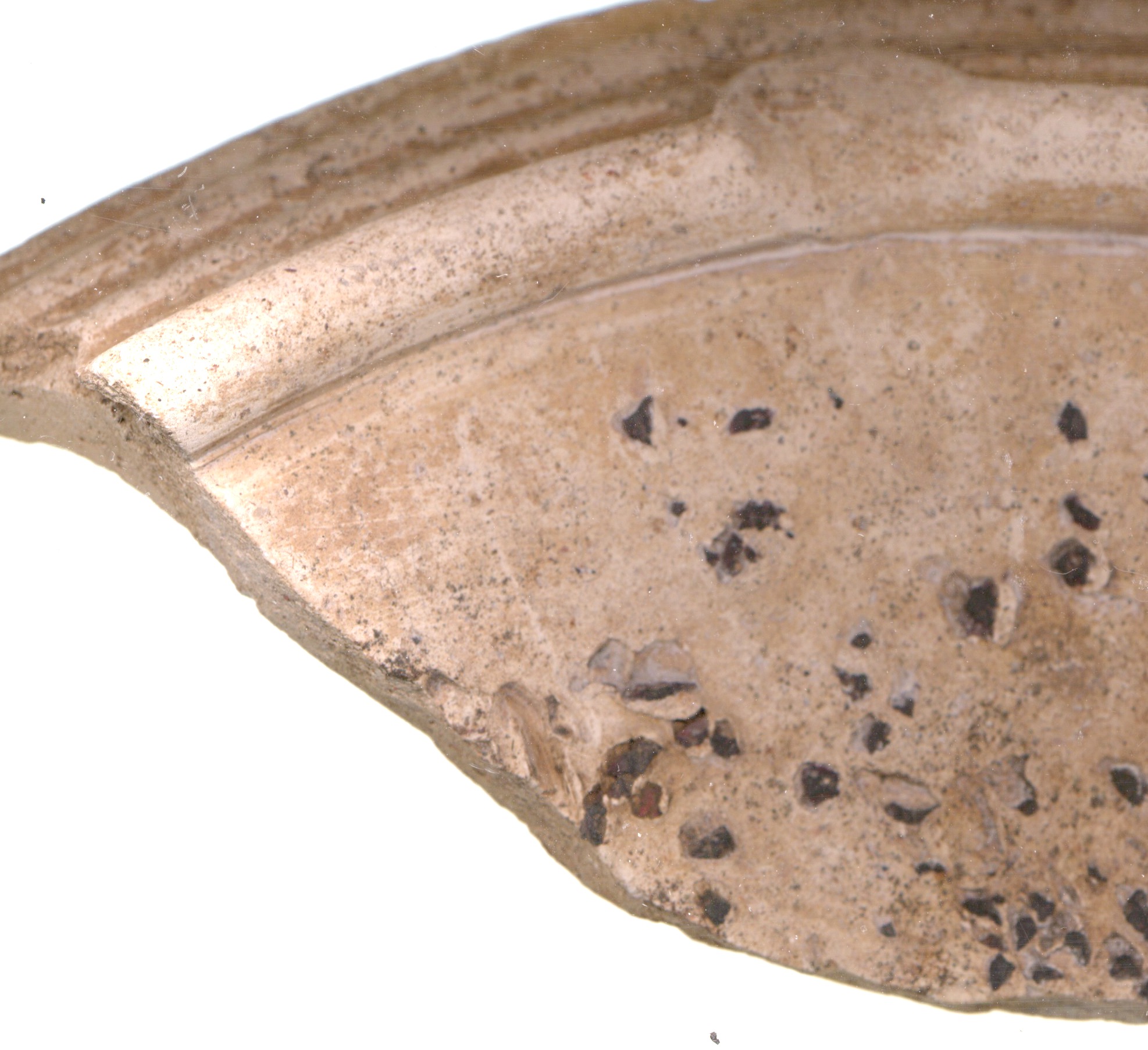
Hard, off-white fabric with light grey or pink core, often a brown or yellowish slip; inclusions of fine red-brown and black particles and variable amounts of quartz. Gritted with abundant crushed dark grey or black iron silicate slag. Wheel-thrown.
Forms
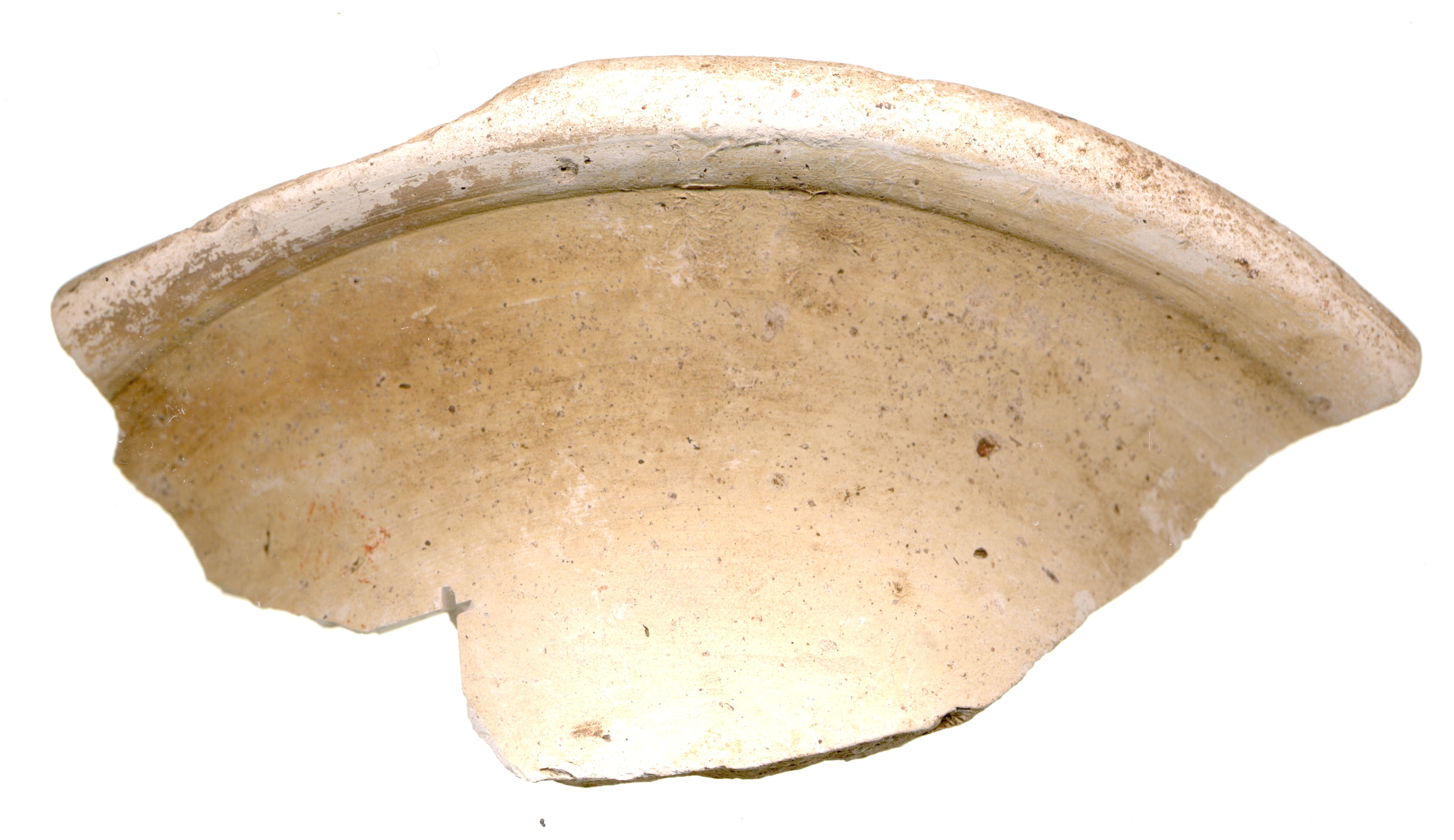
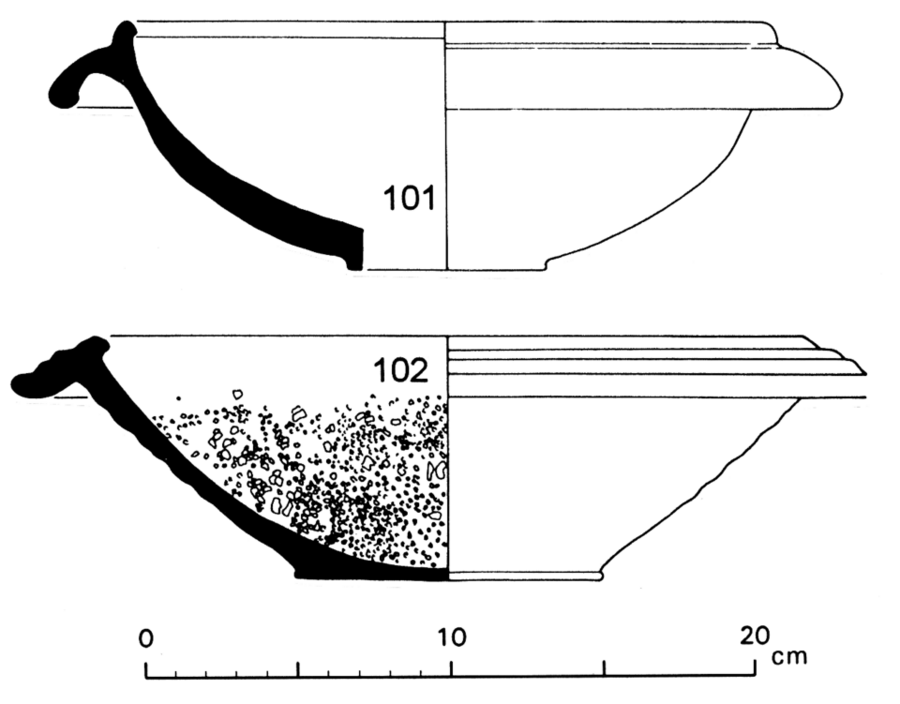
Mortaria, with flange and high bead or reeded rim.
Stamps
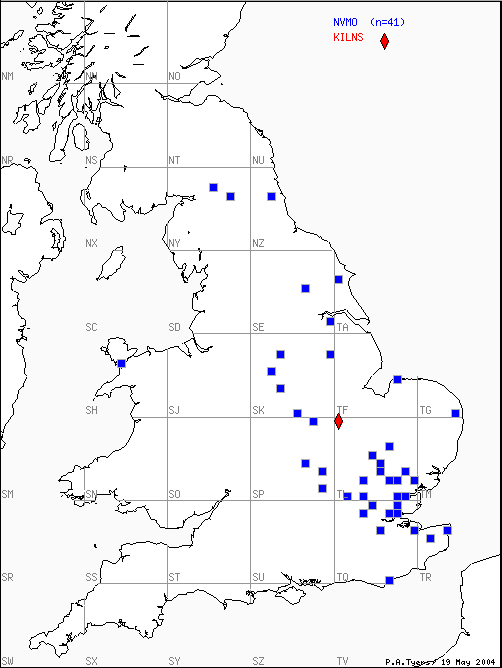
During the 2nd cent. there are a few named potters, but stamping ceases by c. AD 180. Distribution on .
| Potter | Date | |
|---|---|---|
| CAMULACUS iii | 130-160 | |
| CUNOARDA | 130-180 | |
| DOBALLUS | 140-180 | <- MHMO? |
| VEDIACUS | 140-180 | |
| VIATOR | 110-145 |
Table 1. Principal Nene valley mortarium potters, AD 110-180
Chronology
Earliest mortaria date to c. AD 110, and production continues into 4th cent.
Source
The Castor-Stibbington area in the lower Nene Valley. The stamps of Cunoarda read CUNOARDA [FECIT] VICO DUROBRI[VIS] and a painted inscription on another mortarium reads SENNIANVS DUROBRIVIS VRI[..] (/ 2495.1; Howe et al. 1980, 3).
Distribution
Eastern England, as far as the northern frontier, but abundant in the east Midlands and a major source for East Anglia during 3rd-4th cent (Darling 1993, 202-3).
Aliases
Chelmsford fabric 24. Chesterfield fabric m17. Colchester fabrics TE and TF. Gestingthorpe mortarium fabrics K-L. Great Chesterford mortarium fabrics 16 and 17. JRPS bibliography fabric nvm. Leicester fabric MO6. Lullingstone fabric 42. Milton Keynes fabric 4f. Kent mortarium fabric 8. Towcester mortarium fabric 8b.
Bibliography
RCHM gazetteer 95-7, F366-86; production summarized in Howe et al. 1980.
References
Darling 1993. Darling, M. J., Caister-on-Sea Excavations by Charles Green, 1951-55, EAA, 60, (1993).
Howe et al. 1980. Howe, M. D., Perrin, J. R. and Mackreth, D. F., Roman pottery from the Nene Valley: a guide, Occasional paper, 2, Peterborough City Museum and Art Gallery, Peterborough, (1980).