Fabric and technology
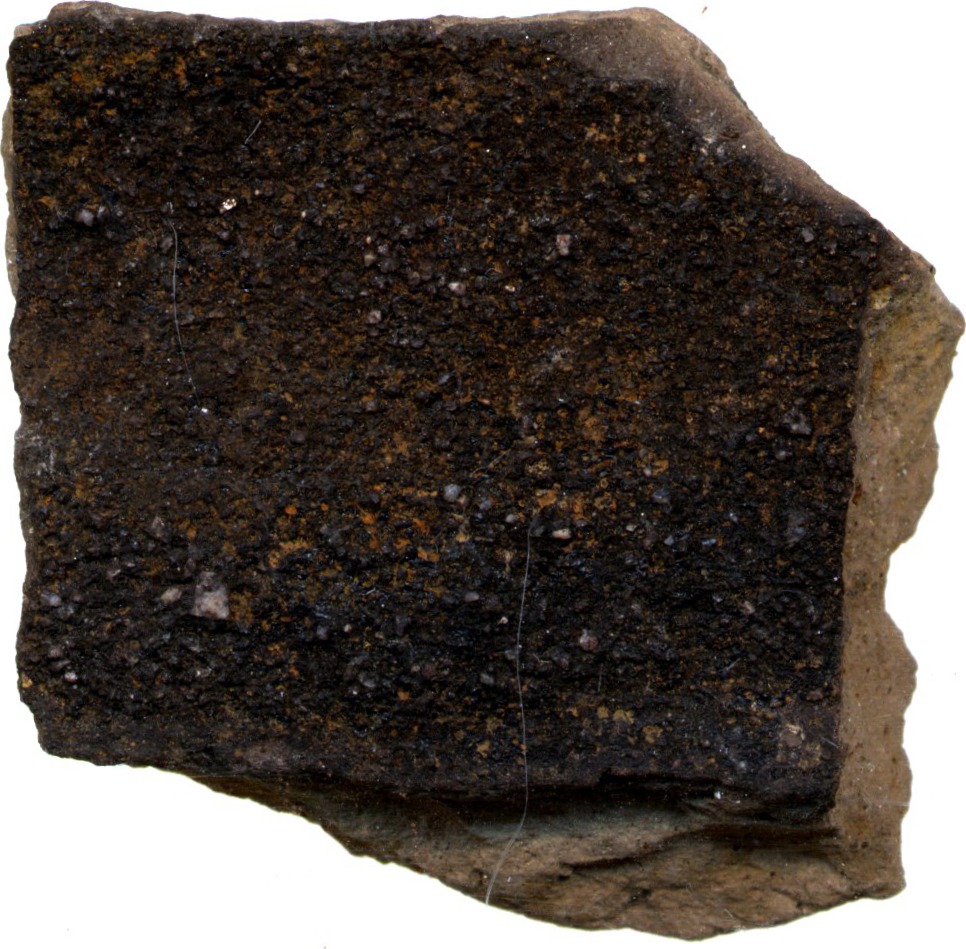
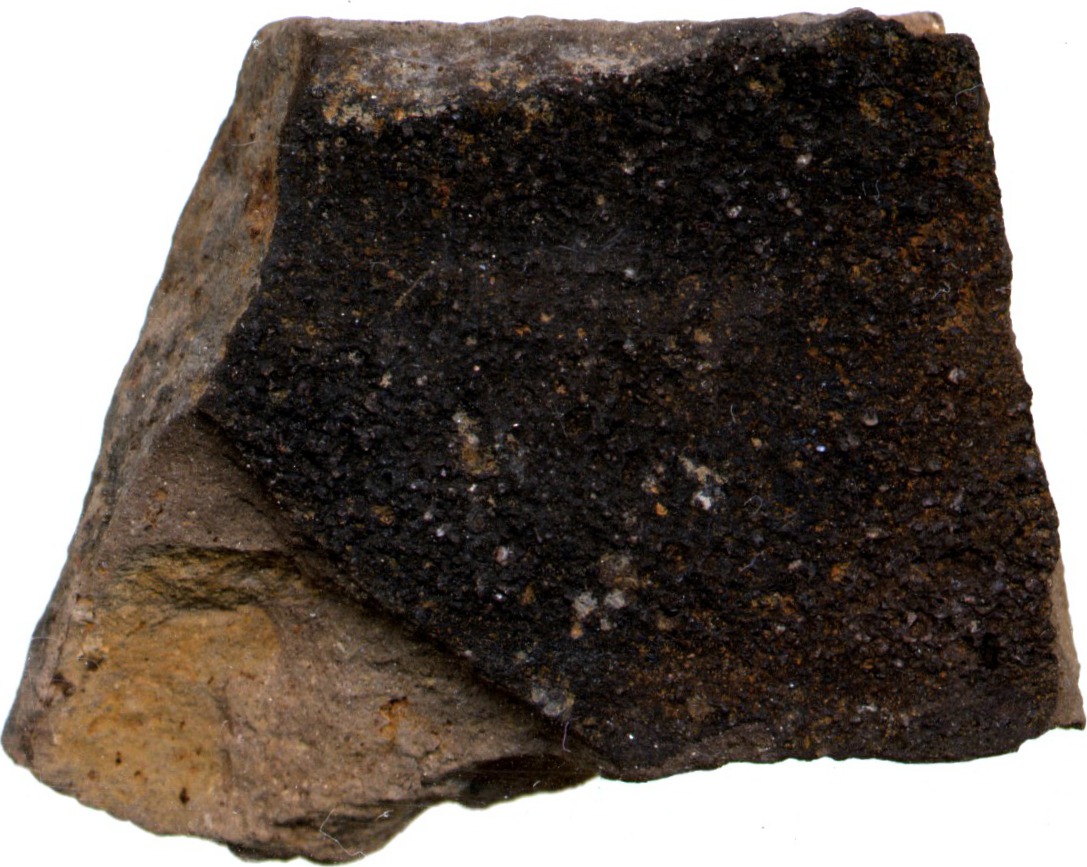
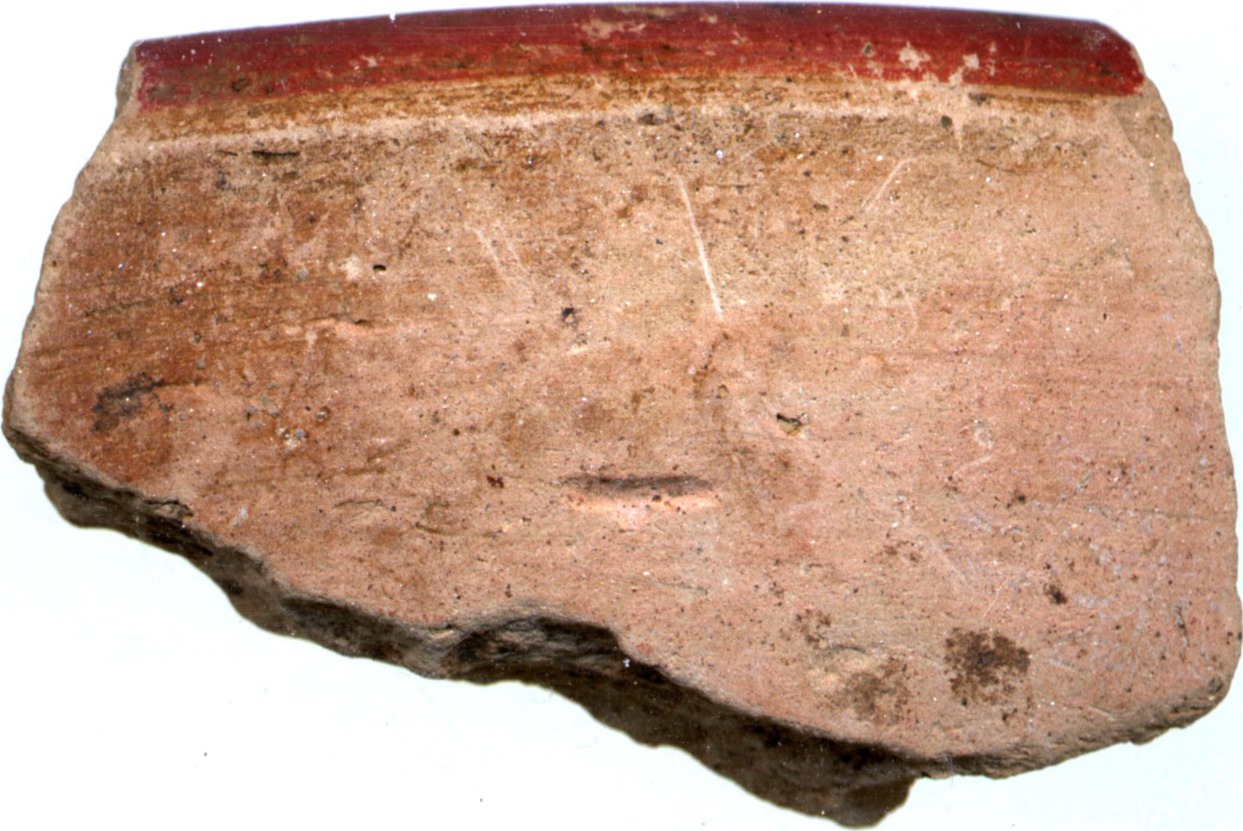
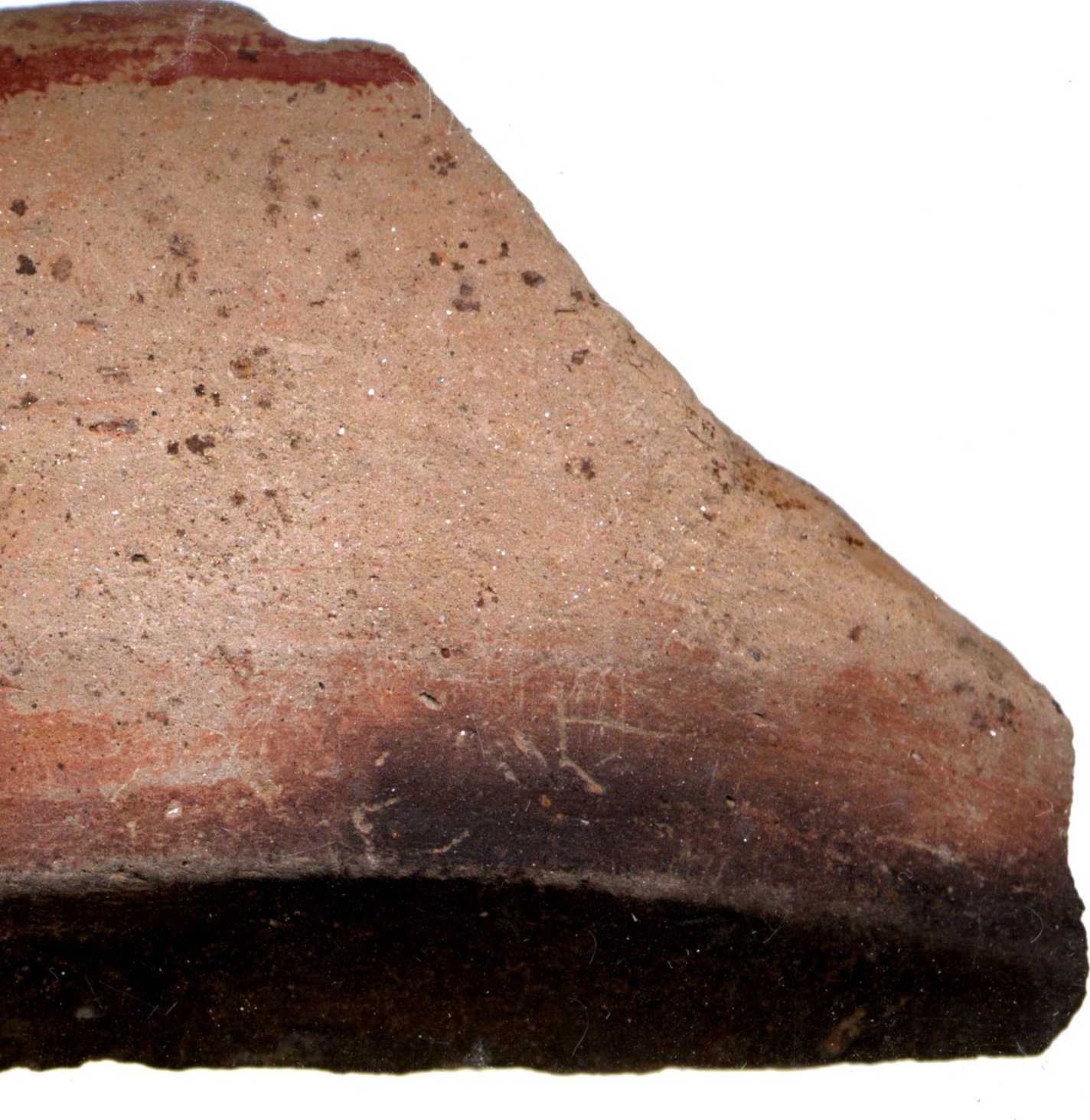
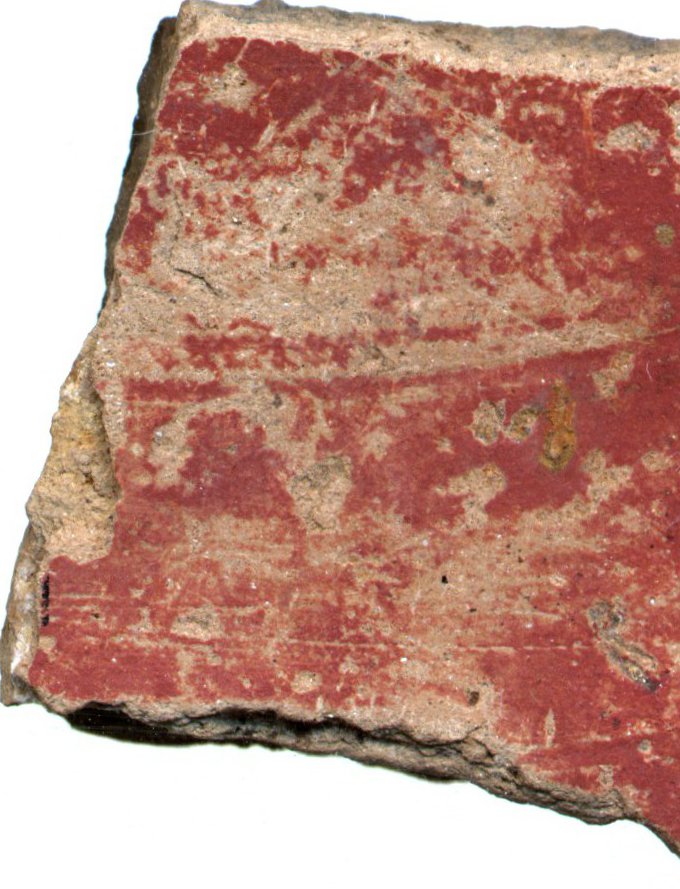
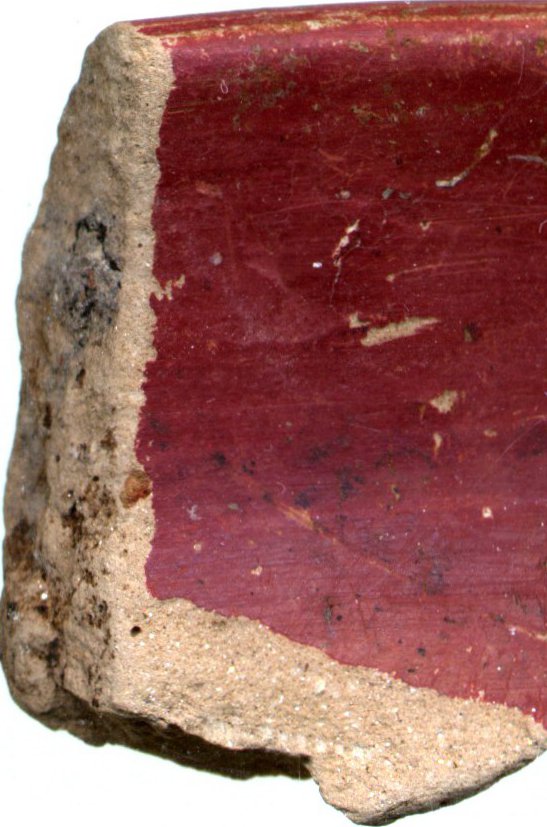
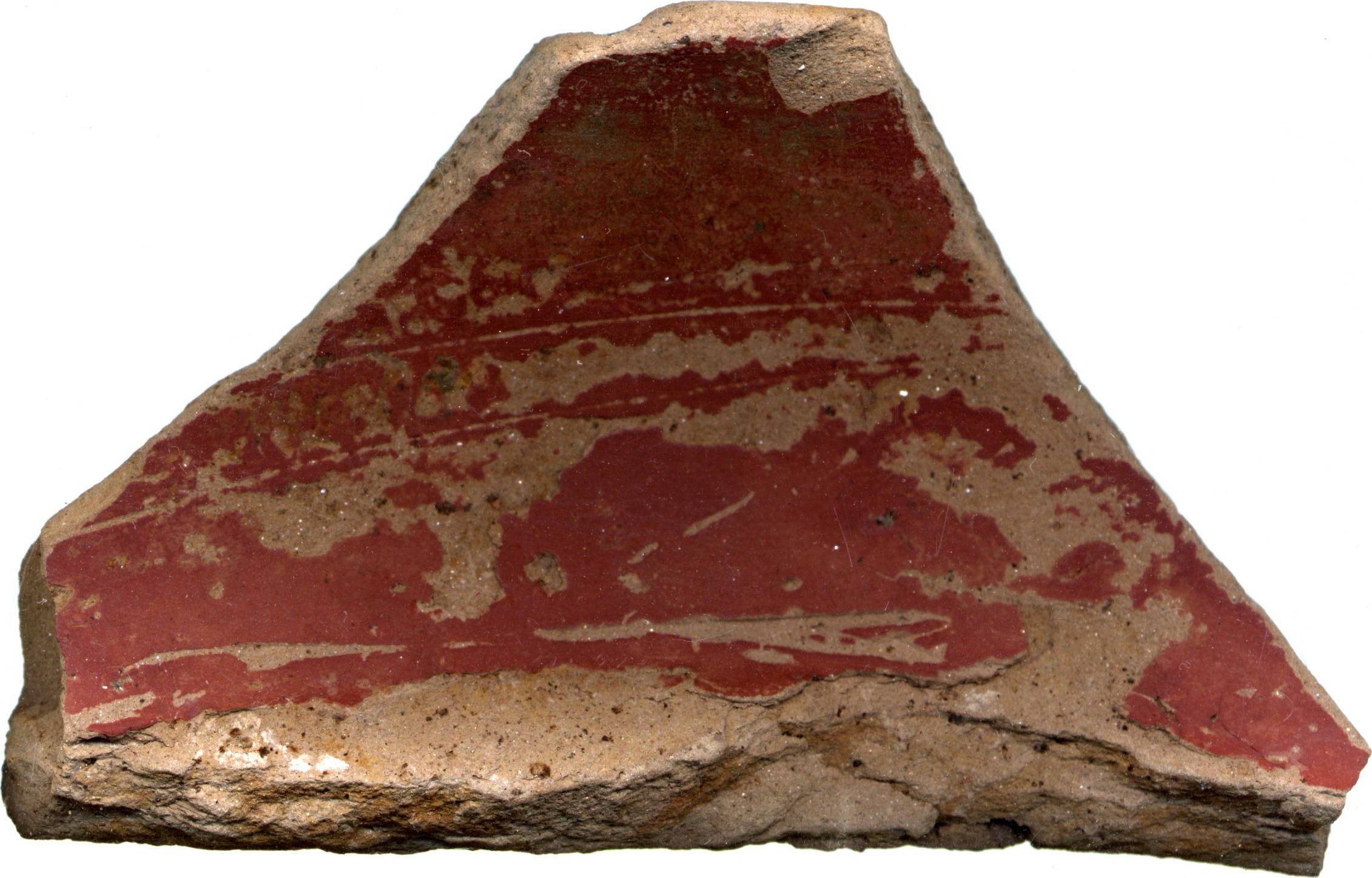
Soft pale beige (7.5YR 7/4) micaceous fabric with smooth fracture. Thin glossy red slip (10R 4/8) on interior and rim of plates; thin light brown (10YR 7/4) wash on lids, and outer surface of some plates. Wheel-thrown.
Forms
Plain-rim dishes, up to c. 35cm in diameter. Some have elaborate incised grooves and rouletted bands on interior, and footrings. Lids have incised concentric circles on exterior.
Chronology
In Britain, from c. AD 40, and particularly common on Neronian-Flavian sites (e.g. Usk, Gloucester, Exeter). Several from Hadrianic fire deposits in London, including Regis House warehouse (Marsh 1981, 222), and specimens from Hadrianic foundations in the north, suggest production and export continues into 2nd cent.
Source
Petrology, and some similarity to fabric of early micaceous Lezoux samian, may suggest source(s) in Central Gaul, but no published evidence suggests production at Lezoux itself. Probably not the product of a single industry.
Distribution
The most extensive British distribution of the PRW fabrics. Predominantly southern, but a scatter in north as far as Inchtuthil. No detailed study of the Gaulish distribution, but micaceous PRW fabrics common in the middle Loire Valley (e.g. Orléans), and have been observed at Alet (Brittany) and Paris.
Aliases
Cirencester fabric 51. Colchester fabric CSOD. Gloucester fabric TF16C. Silchester fabric E22.
Bibliography
Peacock 1977, 154.
References
Marsh 1981. Marsh, G. D., ‘London’s samian supply and its relationship to the development of the Gallic samian industry’ in Roman Pottery research in Britain and North-West Europe. Papers presented to Graham Webster, ed. A. C. Anderson and A. S. Anderson, British archaeological reports. International series, 123, BAR, Oxford, (1981), pp. 173-238.
Peacock 1977. Peacock, D. P. S., ‘Pompeian red ware’ in Pottery and early commerce. Characterization and trade in Roman and later ceramics, ed. D. P. S. Peacock, Academic Press, London, (1977), pp. 147-62.