Fabric and technology
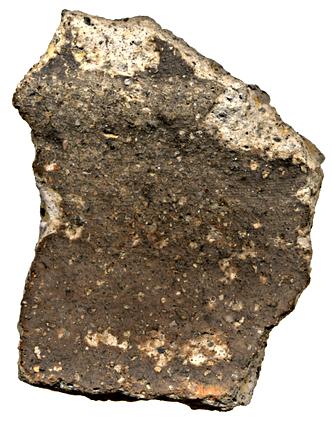
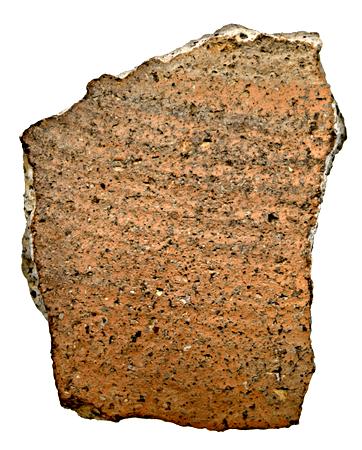
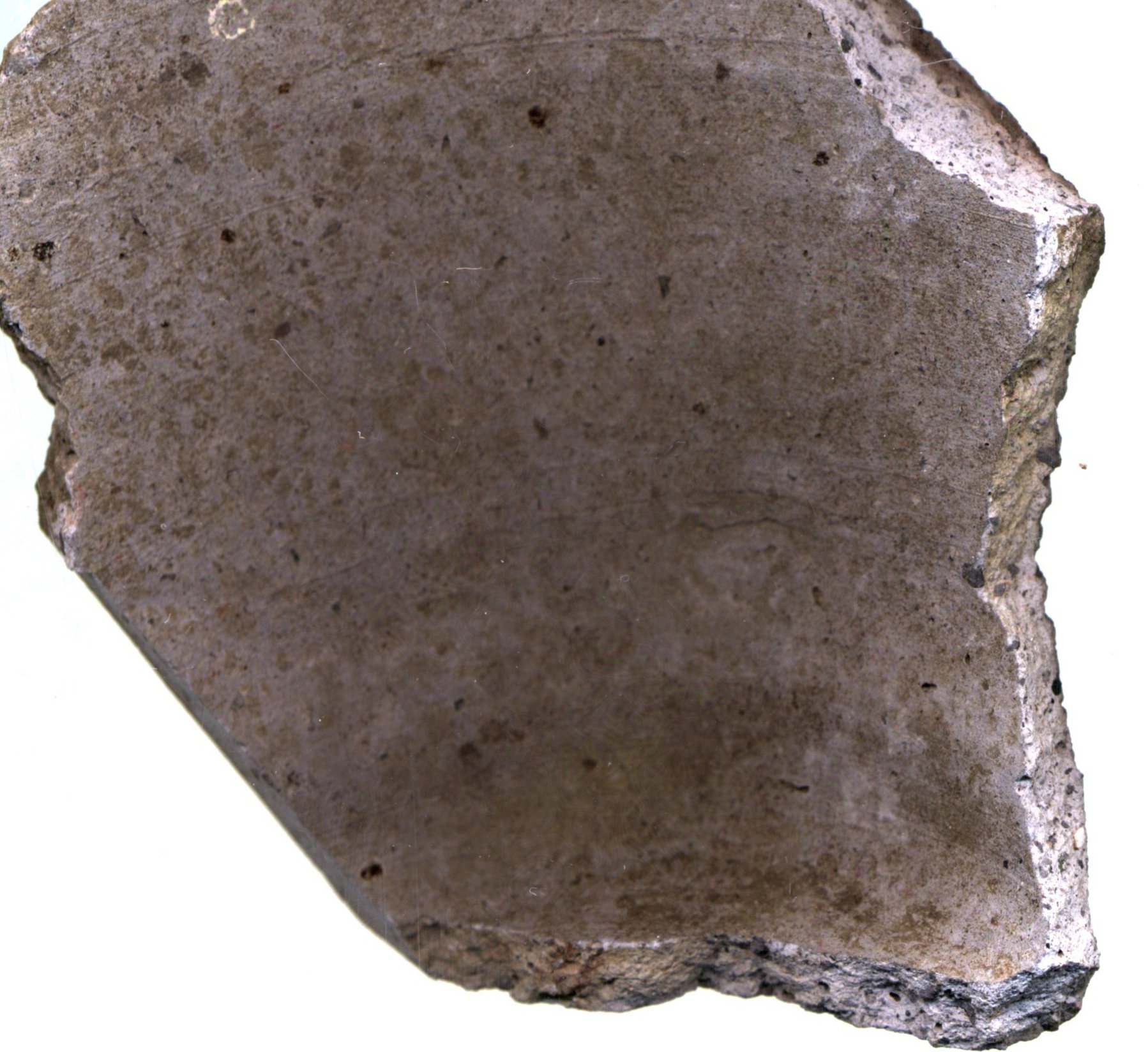
A range of hard, fine-textured fabrics, often with lumpy finish; pale grey, off-white or buff core and surfaces; very little visible sand, but abundant dark blue-grey, or pale grey, grog (up to 4mm) and red-brown iron ores, and occasional brown or white flint. Wheel-thrown. Surfaces often burnished or smoothed.
Forms
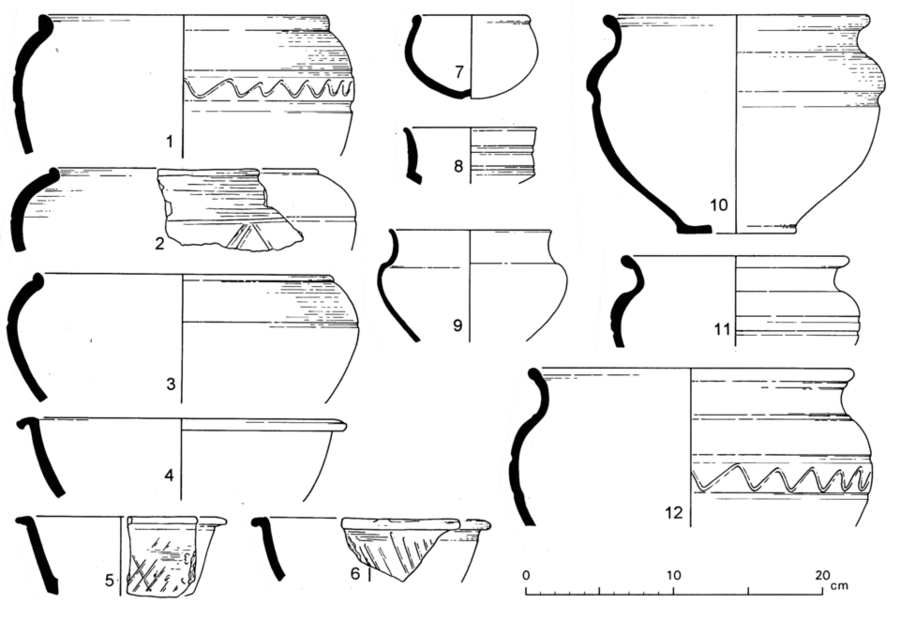
Principally necked jars, with characteristic grooves and cordons on shoulder and body, bead-rim jars, storage jars; other minor forms including beakers, bowls and plates. Black-burnished derived jars and bowls from mid-2nd cent.
Chronology
Commences in Claudian period, and continues into early/mid-2nd cent. AD. Kilns at Lydiard Tregose may be continuation of same tradition (into 3rd/4th cent. ?)
Source
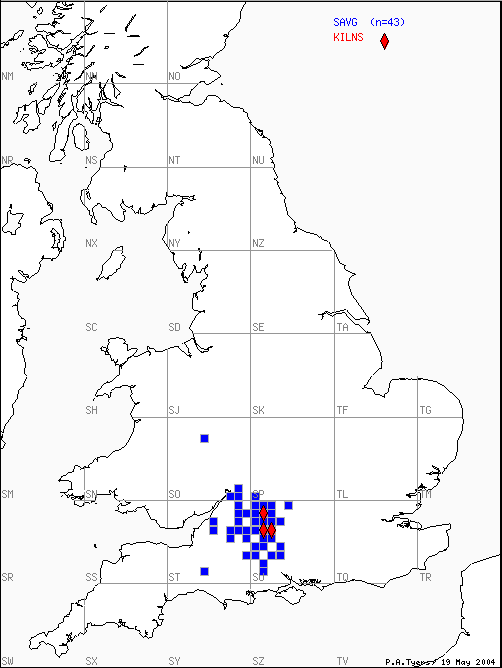
Several sources across north Wiltshire, including Savernake Forest (near Mildenhall), Pewsey and Oare.
Distribution
Wiltshire, extending into bordering counties. Large storage jars and bead-rim jars seem to have widest spread. Hodder suggests distribution through market/service area attached to Mildenhall (Hodder 1974, 75-8).
Aliases
Cirencester fabric 6. Gloucester fabric TF6. JRPS bibliography fabric svr.
Bibliography
Distribution in Hodder 1974; origins in Swan 1975; Greene 1974, 65-6. For kilns: RCHM gazetteer F659-71
References
Greene 1974. Greene, K. T., ‘A group of Roman pottery from Wanborough, Wiltshire’, WiltsAM, 69, (1974), pp. 51-66.
Hodder 1974. Hodder, I., ‘The distribution of Savernake Ware’, WiltsAM, 69, (1974), pp. 67-84.
Swan 1975. Swan, V. G., ‘Oare Reconsidered and the Origins of Savernake Ware in Wiltshire’, Britannia, 6, (1975), pp. 36-61.