Fabric and technology
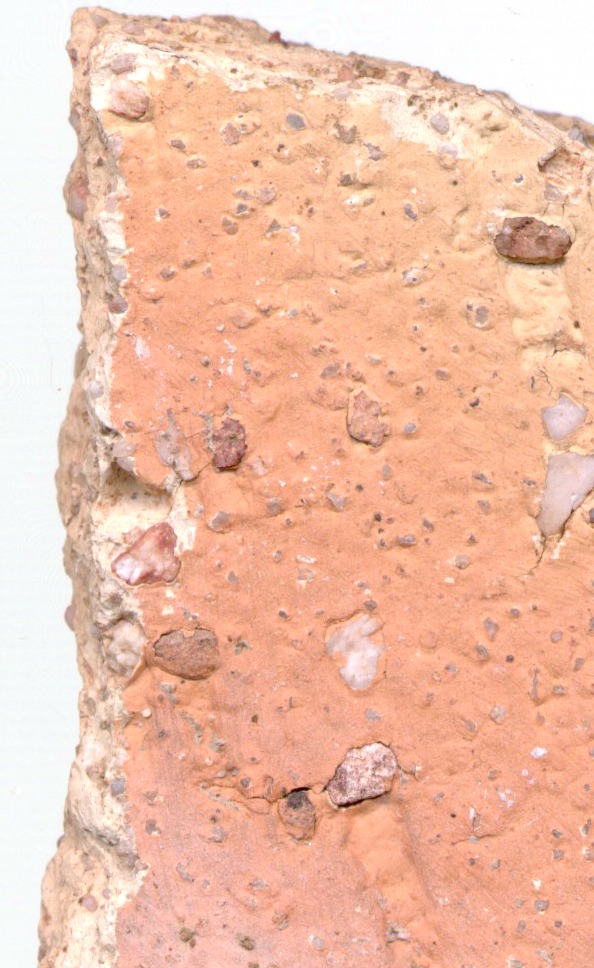
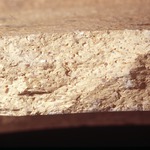
Hard, fine-textured fabric, creamy-yellow in colour with pink core with large white trituration grits.
Forms
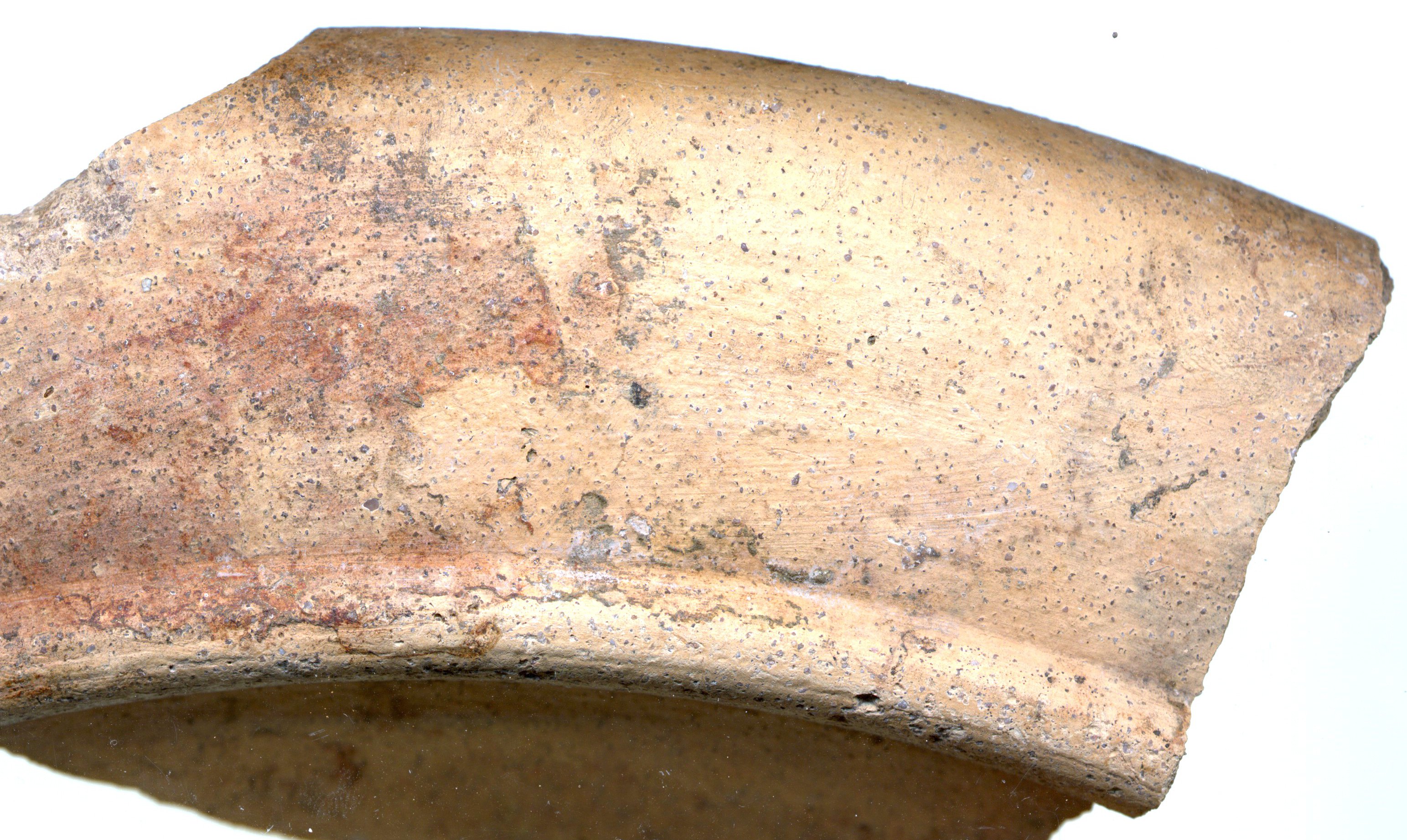
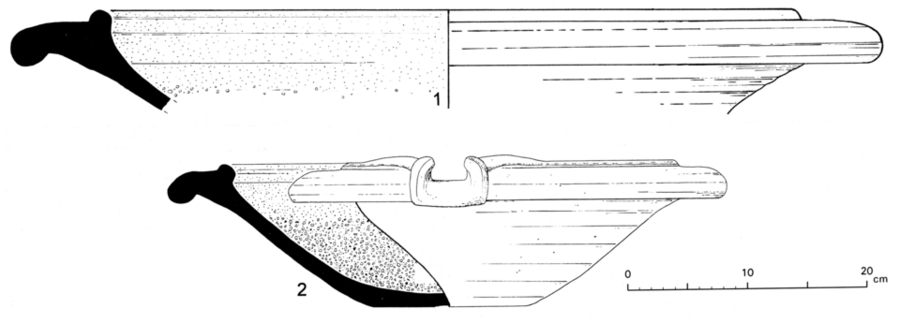
Mortaria, either wall-sided or with thick heavy flat flange.
Stamps
Some vessels with large flange are stamped by Verecundus (AD 150-200); his products are notable for their large diameter (at c. 75cm, twice the size of an ‘average’ mortarium) and he leaves thumb impressions near the stamp and on the end of the spout.
Chronology
AD 150-220.
Source
Kilns excavated at Soller, Kreis Düren (30km SE of Köln).
Distribution
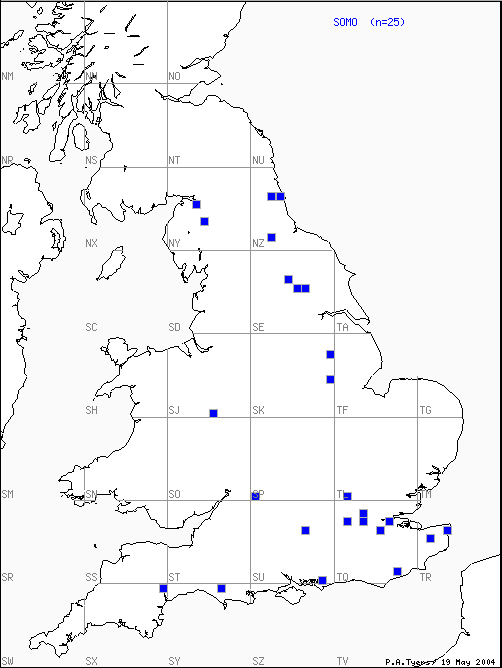
The lower Rhineland and Britain, where they have a thin but widespread distribution. Several example from waterfront deposits at St Magnus House, London (Richardson 1986, 111).
Aliases
Carlisle fabric 618. Chichester mortarium fabric 24. Dorchester fabric 42G. Exeter mortarium fabric FC18. JRPS bibliography fabric slm. Lullingstone fabric 38. Old Penrith fabric 116.
Bibliography
For the kilns see Haupt 1984, with a note by K. F. Hartley on Verecundus.
References
Haupt 1984. Haupt, D., ‘Römischer Töpfereibezirk bei Soller, Kreis Düren’ in Beiträge zur Archäologie des römischen Rheinlands, 4, ed. D. Haupt, Rheinische Ausgrabungen, 23, Rheinland-Verlag, Bonn/Köln, (1984).
Richardson 1986. Richardson, B., ‘The Pottery’ in The Roman quay at St. Magnus House London: excavations at New Fresh Wharf, Lower Thames Street, London, 1974-16, ed. Miller, LAMAS Special Paper, 8, LAMAS, London, (1986), pp. No 1.164-68.