Fabric and technology
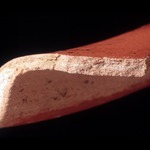
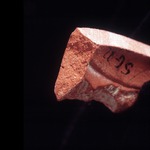
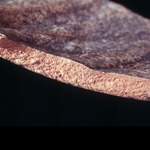
The TR fabric classification (after Hawkes and Hull 1947) is based on fabric colour and texture, and the extent and colour of the slip.
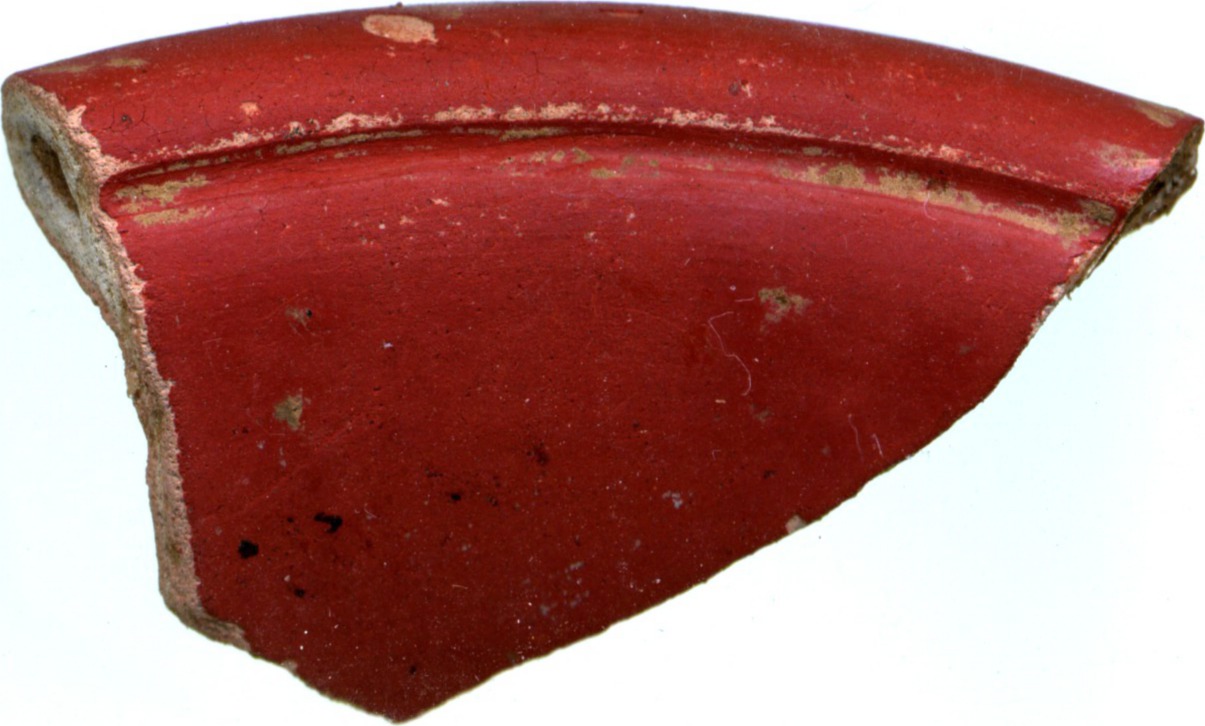
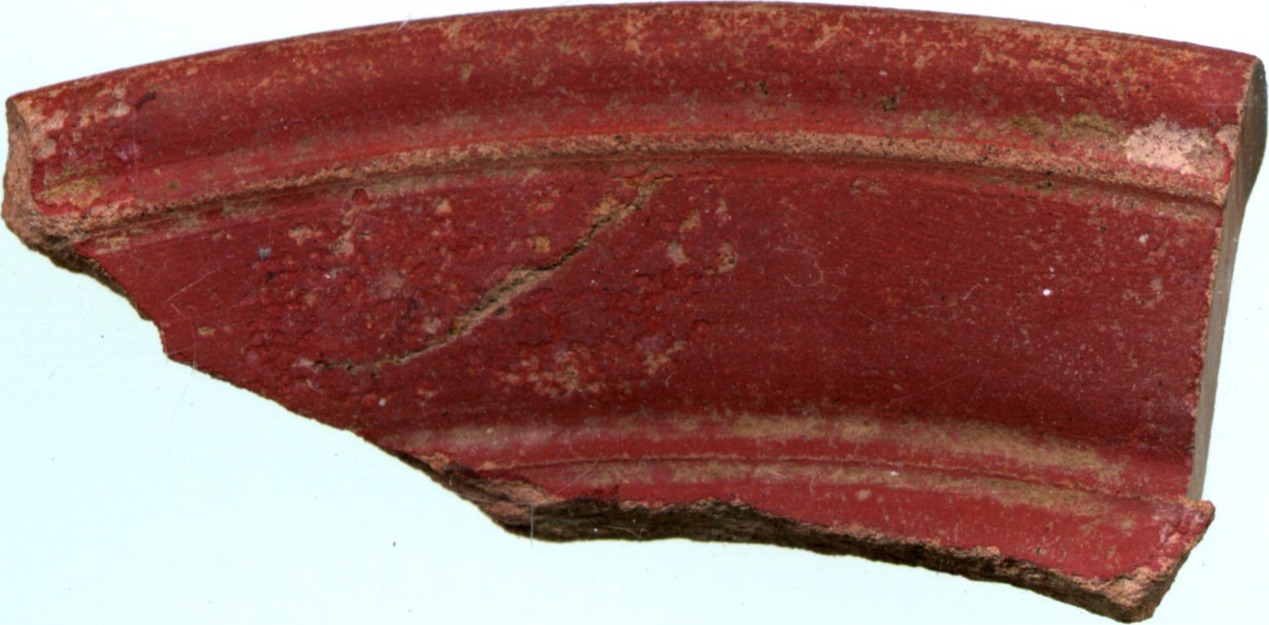
Off-white or pink (2.5YR to 10R 8/8) fabric with slightly sandy texture, with occasional rounded red-grog inclusions; polished coral red slip (10R 7/10-5/12) on upper surfaces of cups and platters and outer surface of pedestal cups.
Pink or buff (10YR 7/4 to 10R 8/8) fabric, slight sandy texture, completely covered with orange or pink (2.5YR 7/12 to 10R 7/10) slip.
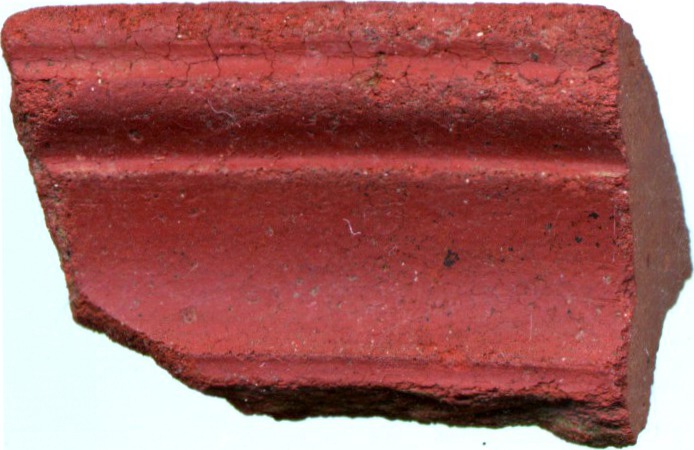
Orange (10YR 6/10) sandy textured fabric, with polished dark red (10R 7/10-5/12) slip on upper surfaces.
Similar to TR1(C), with self-coloured, polished surfaces.
A variable group of cream to dark red fine-textured fabrics with smooth fracture. Highly polished self-coloured surfaces. Some have dark grey, dark chocolate brown or a lighter smoky grey haze.
Forms
Plates, cups and beakers.
Chronology
Production commences by c. 20-10 BC. The proportion of terra rubra in the Gallo-Belgic assemblage drops through the Augustan-Tiberian period, being replaced by terra nigra, and the ware has disappeared by the early Flavian period. The different varieties may be dated thus:
15 BC-AD 25
15 BC-AD 15
AD 1-60
AD 1-65
Source
The principal source is the Vesle valley, near Rheims.
Distribution
North-east Gaul, between the Seine, Moselle and Rhine. In Britain, south and east of the Severn-Humber line, with concentrations in central southern England, and Herts/Essex region.
Aliases
JRPS bibliography fabric trb. Kent fine fabric 7b. Silchester fabrics E7, E8, E9, E10, E11, E12 and E44.
References
Hawkes and Hull 1947. Hawkes, C. F. C. and Hull, M. R., Camulodunum. First report on the excavations at Colchester, 1930-39, Reports of the Research Committee of the Society of Antiquaries of London, 14, Society of Antiquaries, Oxford, (1947).